




Is a Portable Bidet Easy to Use? A Beginner's Guide
Table of Contents
- Yes, Portable Bidets Are Easy to Use, Here's Why
- How to Use a Portable Bidet: Step-by-Step Instructions
- How to Clean with a Bidet: Technique and Best Practices
- Manual Squeeze vs. Button-Operated and Electric Models
- How to Use a Travel Bidet in Hotels and Public Restrooms
- Troubleshooting Common First-Use Problems
- Portable Bidets for Accessibility and Special Needs
- Frequently Asked Questions
Last Updated: October 5, 2026
Yes, Portable Bidets Are Easy to Use, Here's Why
At PortaBidets, we get this question constantly: Is a portable bidet easy to use? The short answer is yes. Most people figure out how to use one within their first attempt. The learning curve is genuinely minimal with PortaBidets, especially compared to what you might imagine.
Here's what makes portable bidets so straightforward. They work on simple mechanics: fill a water reservoir, position the nozzle, control the pressure, and spray. No plumbing. No installation. No complicated settings to memorize. The entire process is intuitive enough that even first-time users get comfortable in minutes.
The real surprise is how much better you feel using one. Once you experience the cleaning power of a proper bidet spray, you understand why people keep coming back. It's not just about hygiene, it's about comfort and control.
We've designed our products specifically to remove the guesswork. Whether you're traveling to a hotel, living in a rental apartment, or simply want a portable solution at home, a portable bidet easy to use experience is entirely achievable.
How to Use a Portable Bidet: Step-by-Step Instructions
Using a portable bidet is straightforward once you understand the basic steps. Most people master the technique on their first try. Here's the complete process.
Setting Up Your Portable Bidet
Before your first use, take two minutes to familiarize yourself with the components. A typical portable bidet system includes a water reservoir, pump, nozzle or spray wand, and tubing. Check that all parts are clean and dry.
If you're using a toilet-mounted model like PortaBidets' Traveler Portable Bidet, position it securely on the toilet rim. Make sure it doesn't rock or shift. Test the mounting bracket to confirm it's stable. This takes about 30 seconds and ensures safe, comfortable use.
For handheld models, simply have the pump and reservoir within arm's reach of the toilet. Lay out the tubing so it won't kink or tangle. Keep the nozzle or spray wand accessible.
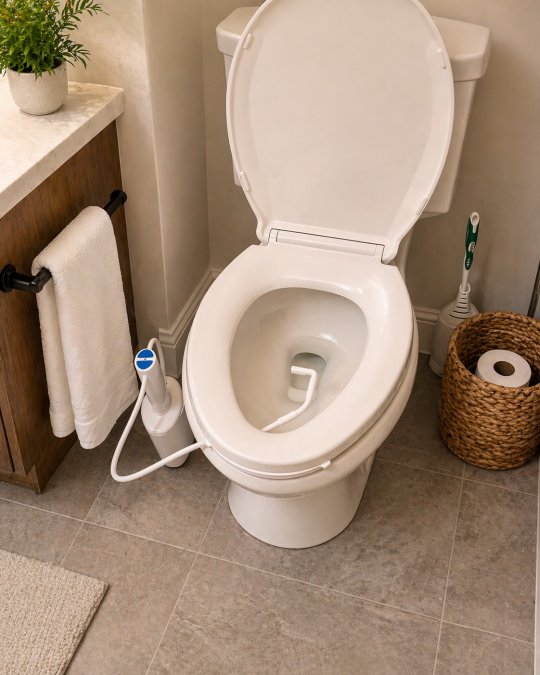
The Traveler Portable Bidet – Toilet-Mounted Travel Bidet
Filling the Water Reservoir
Fill your reservoir with clean, room-temperature water. Most portable bidets hold between 1 and 1.4 liters.
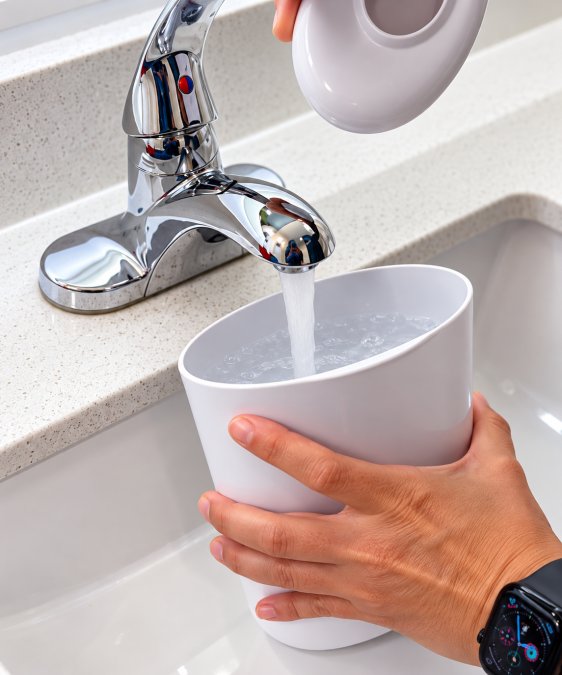
The Traveler Portable Bidet – Toilet-Mounted Travel Bidet
Use tap water directly from your bathroom sink. Fill the reservoir completely for maximum convenience between refills.
Check that the cap or lid seals tightly.
Positioning and Aiming the Spray
Sit on the toilet as you normally would. If you're using a handheld wand, hold it at a slight angle pointing downward. The nozzle should be aimed at the area you want to clean, typically between 4 and 6 inches away from your body.
For toilet-mounted models, the slide the nozzle in and start the flow of water slowly to find the target. You may need to position yourself on the toilet seat.
The positioning matters more than you'd think. A few inches in the wrong direction and the spray misses the mark. Experiment slightly on your first use. Within one or two attempts, you'll find the angle that works for you.
Controlling Water Pressure and Spray Direction
Most portable bidets offer multiple pressure settings. Start on the lowest setting. You can always increase pressure, but you can't decrease it once the spray is active.
Press the button or squeeze the trigger gently. Feel the water pressure. If it's too weak, adjust to a higher setting. If it's too strong, dial it back.
Water pressure control is one of the biggest advantages of a real portable bidet over weak squeeze-bottle alternatives. You get actual cleaning power, not just a dribble.
How to Clean with a Bidet: Technique and Best Practices
The technique is simpler than most people expect. You're essentially using directed water instead of toilet paper to clean. Here's the best approach.
Activate the spray and let the water do the work. You don't need to move around excessively. The pressure and angle handle the cleaning. Most people find that 5 to 10 seconds of spray is sufficient for complete cleanliness.
For posterior cleaning, angle the nozzle slightly backward. For front cleaning, angle it forward. The spray direction changes the coverage area, so adjust based on what you're cleaning.
A common mistake is using too much water pressure on the first try. This surprises people and can feel uncomfortable. Start gentle, then increase if needed. After one or two uses, you'll know exactly what pressure level feels right for you.
Manual Squeeze vs. Button-Operated and Electric Models
Portable bidets come in three main types, each with different mechanics. Understanding the differences helps you choose what works best for your situation.
Manual squeeze bottles require you to squeeze a trigger or bulb to create water pressure. You control the spray by how hard you squeeze. They're lightweight and require no electricity or batteries.
Button-operated models use a pump activated by a button. You press the button to trigger the spray. Water pressure is preset or adjustable via settings.
Electric or battery-powered models use a rechargeable battery to power an electric pump. Press a button and the pump delivers consistent, strong pressure automatically. These require charging but offer the most powerful, effortless spray.
At PortaBidets, we focus on models that deliver real pressure, not the weak spray you get from cheap squeeze bottles.
The right choice depends on your situation. Frequent travelers often prefer button-operated or electric models because they're reliable and require minimal setup.
The Traveler Portable Bidet – Toilet-Mounted Travel Bidet →
How to Use a Travel Bidet in Hotels and Public Restrooms
Using a portable bidet in unfamiliar bathrooms is one of its biggest advantages. The process is identical to home use, but a few extra considerations apply.
In hotel bathrooms: Mount your toilet-mounted bidet securely on the toilet rim. Test the stability before sitting. Fill the reservoir with clean water from the bathroom sink. Use the bidet as you normally would.
In public restrooms: Handheld bidets work better than mounted models in public settings. Fill your reservoir in the sink, then use the handheld wand in the stall. The compact size means you can store it discreetly. Rinse the nozzle afterward using the sink.
Compatibility concerns: Most portable bidets work on standard toilets worldwide. However, some unusual toilet designs, particularly in certain international locations, may not accommodate a mounted bidet. A handheld wand works anywhere because it doesn't require mounting.
Water availability: Ensure you can access clean water to fill your reservoir. In most hotels and public restrooms, tap water is safe. If you're uncertain, use bottled water instead.
Troubleshooting Common First-Use Problems
Most first-time users have a smooth experience. But occasionally, something feels off. Here's how to fix the most common issues.
Spray goes in the wrong direction: You might be angled differently than expected. Shift your position slightly forward or backward on the toilet.
Uncomfortable pressure: You're likely on too high a setting. Start on the lowest pressure mode and increase gradually. Most people find a low to medium setting comfortable.
Battery won't charge: Make sure you're using the correct charger. Check that the charging port is clean and dry.
Most problems resolve with simple adjustments. A portable bidet easy to use means troubleshooting is usually quick and straightforward.
Portable Bidets for Accessibility and Special Needs
Portable bidets offer real benefits for people with limited mobility, elderly individuals, and those recovering from childbirth or surgery. The hands-free spray eliminates the need for difficult reaching or bending.
For elderly users: Manual squeeze bottles require hand strength that some older adults lack. Electric or button-operated models eliminate this barrier. The spray does all the work, no squeezing necessary.
After childbirth or surgery: Gentle spray modes provide thorough cleaning without irritation. You control the pressure precisely, so you can use a soft setting during recovery.
For limited mobility: Sitting on a toilet and activating a spray is far easier than the contortions required for traditional cleaning.
For people with arthritis: Button-operated or electric models require minimal hand strength. You press a button instead of squeezing repeatedly.
The accessibility advantage is one reason portable bidets matter beyond just comfort. They enable independence for people who might otherwise need assistance with personal hygiene.
Using a portable bidet is genuinely easy once you understand the basics. Most people feel confident after their first use.
Frequently Asked Questions
Is a portable bidet easy to use for beginners?
Yes. Most portable bidets require no installation and operate with simple controls: fill the water reservoir, position the nozzle, and adjust pressure. Unlike traditional bidets, portable models give you direct control over water temperature, volume, and pressure. The learning curve is minimal—most users master the technique within one or two uses. Start with the lowest pressure setting to build confidence.
How do you fill and aim a portable bidet?
Fill the water reservoir at any sink before use. For mounted models, position the nozzle directly under the water stream, or use a handheld wand for precise aiming. Start with a low pressure mode to understand the spray direction and intensity. Adjust the angle and pressure gradually until you find what works for you. Most portable bidets offer multiple spray modes to suit different preferences and body types.
How do you dry yourself after using a portable bidet?
You can use toilet paper, a designated bidet towel, or reusable cloth wipes. Many users find they need significantly less toilet paper than before—typically one or two sheets for final drying. If using a cloth wipe, keep it in a separate container for washing.
Can you use a portable bidet in a public restroom?
Yes, handheld models work well in public restrooms since they require no mounting. Compact, collapsible designs fit easily in a bag or backpack. Mounted models designed for travel, like The Traveler, are also portable but require a few minutes to set up on the toilet. Most public restrooms have sinks nearby for refilling the water reservoir, making portable bidets practical for frequent travelers and digital nomads.


