




Bidet Enema: Safe Use, Mode Guide, and What to Know
Table of Contents
- Bidet Enema Basics: What It Is and How It Works
- Using Bidet Enema Mode Safely: Pressure, Temperature, and Timing
- Bidet for Constipation and Bidet Bowel Problems: Realistic Expectations
- Bidet vs Enema: What Actually Differs
- Choosing Bidet Features That Support Safe Use
- Frequently Asked Safety Questions
- Frequently Asked Questions
Last Updated: October 20, 2026
Bidet Enema Basics: What It Is and How It Works
A bidet enema is a stream of water directed into the rectum using a bidet wand or nozzle, usually to help empty the bowel, not the same as washing the outside of the body. At PortaBidets, we build portable bidets with a dedicated enema wand, so we hear this often. A standard bidet rinse cleans the perineal area and anus; a true enema delivers water past the anal opening into the rectum, and bidet "enema mode" sits in between. External washing is low risk; rectal irrigation carries real risks, including irritation and, rarely, injury.
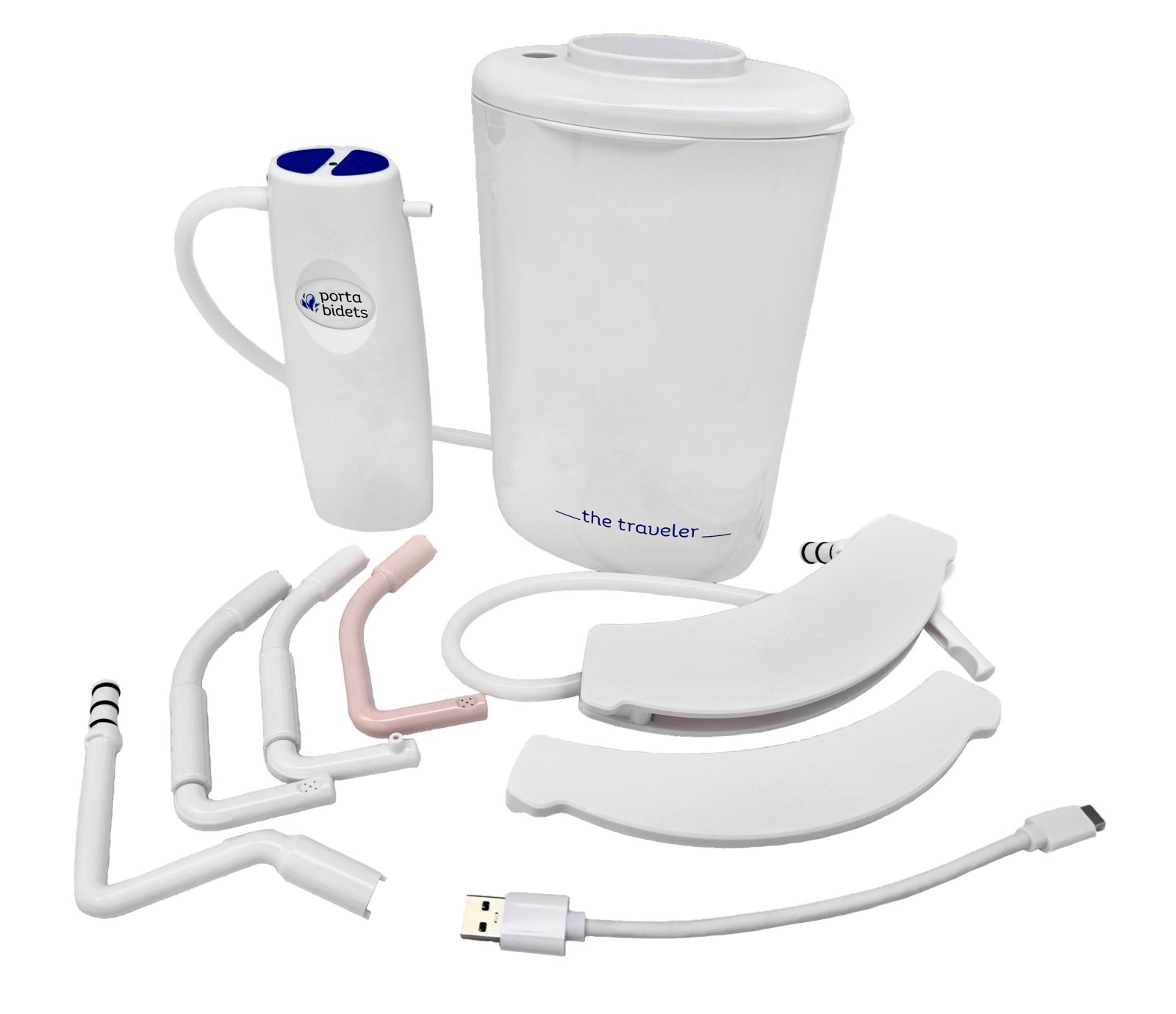
The Traveler Bidet Contents including three various water wands- wash, enema and feminine
Using Bidet Enema Mode Safely: Pressure, Temperature, and Timing
Start low, keep it short, and stop early, most problems come from too much pressure, water that is too warm, or staying at it too long.
- Pressure: lowest setting; increase one step only if nothing happens.
- Temperature: lukewarm, close to body temperature.
- Timing: 10 to 20 seconds per attempt, a few attempts max.
- Position: sit upright or lean slightly forward.
- Hygiene: clean the nozzle before and after every use; never share a wand.
If nothing moves after a couple of gentle tries, stop.
Bidet for Constipation and Bidet Bowel Problems: Realistic Expectations
A bidet can help with bowel problems, but it is a comfort tool, not a treatment; many people find warm water and gentle pressure make a bowel movement easier to pass, especially when stool is hard. A bidet enema does not fix the cause of constipation or replace fiber, fluids, movement, a doctor's advice, or a prescribed enema solution or device.
Bidet vs Enema: What Actually Differs
A bidet cleans the outside; an enema puts fluid inside the rectum, bidet enema mode is the overlap, and the riskiest part of it.
Feature |
Bidet Wash |
Bidet Enema Mode |
Traditional Enema |
|---|---|---|---|
Where water goes |
External skin |
Rectum, shallow |
Rectum, deeper |
Typical use |
Daily hygiene |
Occasional bowel help |
Medical or prescribed |
Main risk |
Almost none |
Irritation if overused |
Injury if misused |
The common mistake is treating the middle column like the first one.
Choosing Bidet Features That Support Safe Use
The features that make a bidet enema safer are boring ones: adjustable pressure, a separate enema wand, and an easily cleaned nozzle. The Traveler from PortaBidets includes four pressure modes and three wash types, including a dedicated enema wand, plus a 1.4L reservoir; the handheld Wand attaches to the same pump for more control by hand.

Frequently Asked Safety Questions
Is a bidet enema safe to use every day?
No. Daily rectal irrigation can irritate tissue and disrupt normal bowel function; use it occasionally, and see a doctor if you feel you need it often.
Can a bidet enema replace a medical enema?
No. A prescribed enema uses specific solutions and volumes; a bidet enema is water only and should never stand in for medical treatment.
What are the warning signs to stop?
Stop for pain, bleeding, cramping that does not settle, or faintness. Seek medical care if symptoms persist.
Frequently Asked Questions
Is it safe to use a bidet as an enema?
Using a bidet for external cleansing is safe for most people. Using it as a true enema, meaning directing water into the rectum, carries more risk. Too much pressure or repeated use can irritate the lining of the rectum, disrupt natural bowel function, and increase infection risk. A portable bidet with a dedicated enema mode and adjustable pressure settings gives you more control than a squeeze bottle. If you have hemorrhoids, recent rectal surgery, or a compromised immune system, talk to a doctor before trying it.
How is a bidet enema different from a medical enema?
A medical enema uses a measured volume of a specific solution, often saline or a prescribed laxative, delivered with a device designed for that purpose. A bidet enema uses plain warm water from your bidet's enema mode, and the volume and pressure depend on the device and how long you hold the flow. Medical enemas are typically for diagnosed constipation or bowel prep under a clinician's guidance. A bidet enema is best treated as gentle, occasional support, not a replacement for medical treatment.
Can a bidet cause bowel problems if I use it often?
Relying on a bidet enema every day can train your bowel to expect help, which may make natural bowel movements harder over time. Signs to watch for include needing the bidet to pass stool, straining when you skip it, or increasing the pressure to get the same result. Keep use occasional, use the lowest pressure that works, and limit sessions to a few minutes. If constipation persists for more than a couple of weeks, see a doctor rather than escalating bidet use.
Constipation and bowel trouble are frustrating, and guessing at pressure settings makes it worse. PortaBidets builds portable bidets with adjustable pressure modes, a dedicated enema wand, and no plumbing required, so you stay in control wherever you are. Start low, keep it short, and get the setup that lets you do both. Shop bidets at PortaBidets and clean up with confidence.


