




How to Install a Bidet Without Plumbing: 2026 Guide
Table of Contents
- What "Without Plumbing" Actually Means for a Bidet
- Bidet Attachment With Water Reservoir: How It Works
- How to Install a Bidet Attachment (Reservoir Type) Step by Step
- Handheld Bidet Wand: The Sprayer Option With No Hookup
- No-Plumbing Bidet for Renters: Zero-Modification Setup
- Common Mistakes, Leaks, and Troubleshooting
- Conclusion
- Frequently Asked Questions
Last Updated: October 9, 2026
What "Without Plumbing" Actually Means for a Bidet
Most people searching for how to install a bidet without plumbing assume they need a plumber, a permit, or a landlord's blessing. They don't. The phrase gets used two different ways, and mixing them up is why so many shoppers end up frustrated.
This guide from PortaBidets cuts through that confusion. We build reservoir-based bidets, so we have a clear stake in explaining the difference.
A bidet without plumbing is a bidet that cleans you using stored water rather than a live connection to your home's water line. No supply line, no shutoff valve, no T-adapter, no tools.
No Dedicated Plumbing vs. No Water Connection
These two ideas get lumped together, but they describe very different products.
- No dedicated plumbing: The bidet still hooks into your toilet's existing water supply. It just doesn't need a separate plumbing line run to the wall.
- No water connection: The bidet holds its own water in a reservoir. It never touches your plumbing at all.
The first type is a standard bidet attachment. It uses your toilet's cold water line through a T-adapter. The second type is what renters and travelers actually want.
That distinction decides everything that follows: what you buy, what you install, and whether your landlord ever finds out.
Bidet Attachment With Water Reservoir: How It Works
A bidet attachment with water reservoir is a bidet that stores water in a tank or bottle and sprays it on demand, with no connection to your toilet's supply line. You fill it, mount it, and use it.
No shutoff valve to turn. No supply line to disconnect. No leak risk from a bad T-adapter seal.
Here's the trade-off nobody mentions: reservoir capacity sets your limit. A 1.4L tank handles a normal session fine.
For renters, that's a fair swap. You get a real bidet experience and zero permanent changes to the bathroom.
How to Install a Bidet Attachment (Reservoir Type) Step by Step
Installing a reservoir bidet takes about five minutes and no tools. You check fit, mount the unit, fill the tank, and test the spray. The failure points are almost always compatibility and clearance, not the install itself, so run the checks below before you mount anything.
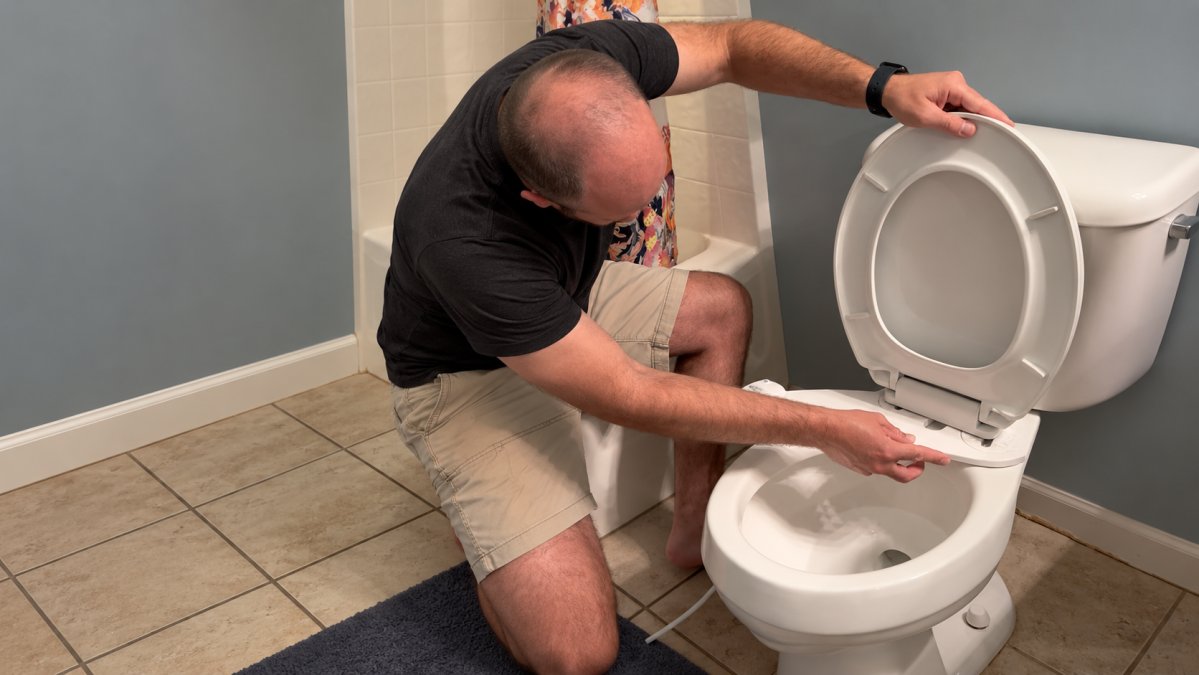
Close-up of hands mounting a compact reservoir bidet attachment onto a standard white toilet seat in a bright bathroom, no tools visible
Securing the reservoir firmly ensures that the unit remains stable even in tight quarters where a small bathroom vanity fitting might otherwise restrict your range of motion during the installation process.
Step 1: Compatibility Checks Before You Buy
The Home Bidet fits most standard toilets with a removable seat that can be raised approximately ½ inch. Place the attachment beneath the seat, tighten the existing seat bolts. One-piece seats with hidden hinges or integrated covers often have no exposed bolt to work around.
Step 2: Mount, Fill, and Test
- Wipe the mounting area clean and dry. Any grit under the bracket causes a wobble.
- Attach the bracket or hook to the seat or rim. Hand-tighten only; over-tightening cracks plastic clamps.
- Fill the tank with water, warm or cool, your choice. Place it on the floor next to the toilet. Put the lid and the pump on top.
- Turn on the pump, and press + to start the flow of water.
What you'll need: a clean cloth, water, and your bidet unit. That's it.
How the Options Rank by Plumbing Required
Not every "no plumbing" product is equally connection-free. Here is the honest ranking, from zero plumbing to a real water-line tap.
Option |
Plumbing Required |
Tools |
Reversible? |
Best For |
|---|---|---|---|---|
Squeeze bottle bidet |
None |
None |
Yes |
Travel, ultralight |
Reservoir attachment (PortaBidets Home & Traveler) |
None |
None |
Yes |
Renters, apartments, daily use |
Handheld wand with pump and reservoir |
None |
None |
Yes |
Sprayer-style control |
Standard T-adapter attachment |
Toilet water line tap |
Wrench |
Yes, with care |
Homeowners |
Plumbed bidet seat |
Dedicated line |
Plumber |
No |
Permanent remodels |
The first three never touch your water supply.
PortaBidets Wand – Handheld Bidet, No Plumbing Needed →
Handheld Bidet Wand: The Sprayer Option With No Hookup
A handheld bidet wand gives you the same no-plumbing benefit with more control over aim and angle. You hold it, point it, and spray.
The PortaBidets Wand pairs with a pump and reservoir system for consistent pressure. It's the option we'd pick for anyone who wants sprayer-style control rather than a fixed seat attachment.

No-Plumbing Bidet for Renters: Zero-Modification Setup
A no-plumbing bidet for renters leaves no marks, no residue, and no evidence. Nothing gets unscrewed. Nothing gets sealed. Nothing touches the water line.
That matters if your lease bans modifications. A reservoir unit lifts off the toilet in seconds when you move out.
The Traveler from PortaBidets mounts to the toilet for your whole stay and runs on a 1.4L reservoir with four pressure modes and three wash types. It packs flat for travel and works the same in a hotel bathroom as it does at home.

Setup |
Plumbing Needed |
Tools Needed |
Best For |
|---|---|---|---|
Reservoir attachment |
None |
None |
Renters, apartments |
Handheld wand |
None |
None |
Travel, control |
Standard T-adapter attachment |
Water line tap |
Wrench |
Homeowners |
Plumbed bidet seat |
Dedicated line |
Plumber |
Permanent remodels |
Common Mistakes, Leaks, and Troubleshooting
Most problems with no-plumbing bidets come down to a short list: overfilling, a loose mount, a worn seal, or low pressure.
- Overfilling the tank: water spills when you tilt the unit.. A 1.4L reservoir is sized for a normal session.
- Loose mounting: the unit shifts mid-use. Reseat the bracket, check the clamp, and confirm the mounting surface is flat. A curved rim needs a different bracket style.
- Weak spray: low battery or low water. Charge fully and refill..
- Unit will not stay put: the seat is too thick, too thin, or has hidden hinges. Try a different mount style or a rim-clamp bracket.
What to Do If You Have a Plumbed Unit
If you already own a T-adapter attachment and it leaks, the usual culprits are a cross-threaded T-adapter, a missing washer, or a supply line that was over-tightened. Shut off the valve, loosen the connection, reseat the washer, and hand-tighten plus a quarter turn.
When to Call a Professional
Reservoir and wand units never require a plumber because they never connect to your water supply. The moment you tap a toilet line, local plumbing requirements may apply. If you are unsure, ask before you cut or loosen anything.
For general guidance on household water use and fixture standards, the U.S. Environmental Protection Agency's WaterSense program publishes plain-language resources.
Conclusion
The hardest part of going without a plumbed bidet isn't the install.
PortaBidets builds exactly that. Our Wand pairs with a pump and reservoir system for consistent high pressure, no installation required. The Traveler mounts to any toilet for your entire stay, with four pressure modes, three wash types, and a 1.4L reservoir that packs into a carry-on. The Home model mounts to the toilet using the toilet seat screws.
Get started with PortaBidets and get a real bidet experience anywhere you go.
Frequently Asked Questions
Can you install a bidet without connecting it to plumbing?
Yes. A reservoir-powered bidet attachment holds water in its own tank, so it never touches your toilet's supply line. You fill it by hand, mount it on the seat, and use it. The PortaBidets Traveler, for example, carries a 1.4L reservoir and offers four pressure modes. Nothing connects to a shutoff valve, so there is no plumbing work, no T-adapter, and no risk of a supply-line leak.
How do you install a bidet attachment with a water reservoir?
First, check that your toilet seat has room for the mount. Remove the seat if needed, position the reservoir attachment over the bowl, and secure it with the included brackets. Fill the reservoir with water, then test the spray before regular use. No tools and no water-line connection are required, which is why this setup suits renters and travelers who cannot modify fixtures.
Can renters use a bidet without modifying a toilet?
Renters can use a no-plumbing bidet because nothing is permanently altered. A reservoir attachment or handheld wand sits on or beside the toilet and lifts off when you move out. There is no drilling, no shutoff-valve work, and no plumber. If your lease bans fixture changes, a portable reservoir unit keeps you compliant while still giving you a real bidet experience at home or on the road.
How do you install a handheld bidet wand without a water hookup?
A handheld bidet wand pairs with a pump and reservoir instead of a supply line. Fill the reservoir, connect the wand hose to the pump, and you have high-pressure spray on demand. The PortaBidets Wand works this way at home, in hotels, or at the office. No shutoff valve, T-adapter, or plumbing connection is involved, so setup takes minutes and leaves the toilet untouched.


