




Install a Bidet in an Apartment Without a Plumber
Table of Contents
- Can You Install a Bidet in an Apartment Without a Plumber?
- Bidet for Apartment No Plumbing: The Truly Tool-Free Option
- Rental Rules: Landlord Approval, Lease Terms, and Liability
- Checking Toilet and Bathroom Compatibility Before You Buy
- Bidet Attachment Installation: A Step-by-Step Guide
- How to Remove a Bidet Attachment When You Move Out
- Common Mistakes and Troubleshooting in Apartment Bathrooms
- Conclusion: Pick the Setup That Fits Your Lease
- Frequently Asked Questions
Last Updated: October 8, 2026
Can You Install a Bidet in an Apartment Without a Plumber?
Yes, you can install a bidet in an apartment bathroom without a plumber, the trick is matching the setup to your lease and toilet. A no-plumbing home bidet needs zero tools and zero changes to the toilet, while a standard bidet attachment connects to your water line but takes most renters under an hour with a basic wrench.
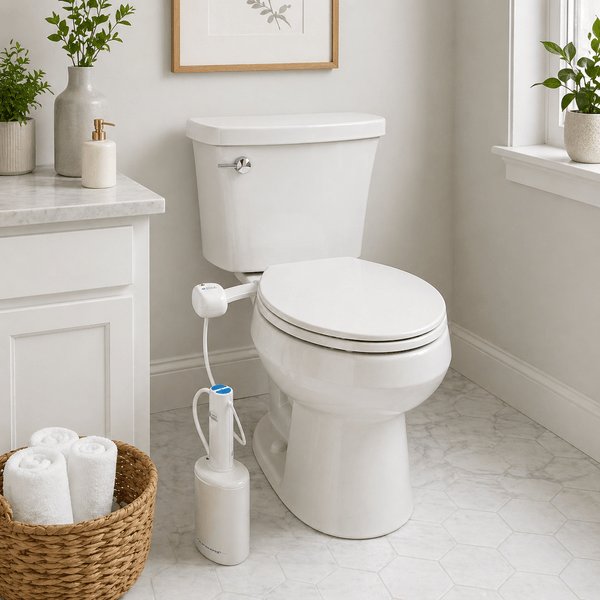
The Home Bidet- No plumbing bidet attachment
At PortaBidets, we started as a Kickstarter campaign and now have 184 reviews from customers who faced the same problem.
Below, we'll show you how to install a bidet toilet seat without a plumber, covering shutoff valve installation, and the tool-free option that skips plumbing entirely.
Bidet for Apartment No Plumbing: The Truly Tool-Free Option
The safest apartment bidet never touches your water supply. A portable, rechargeable bidet uses its own reservoir and pump, no T-adapter, no shutoff valve, no connection to your toilet. You fill the tank, mount the unit, and use it.
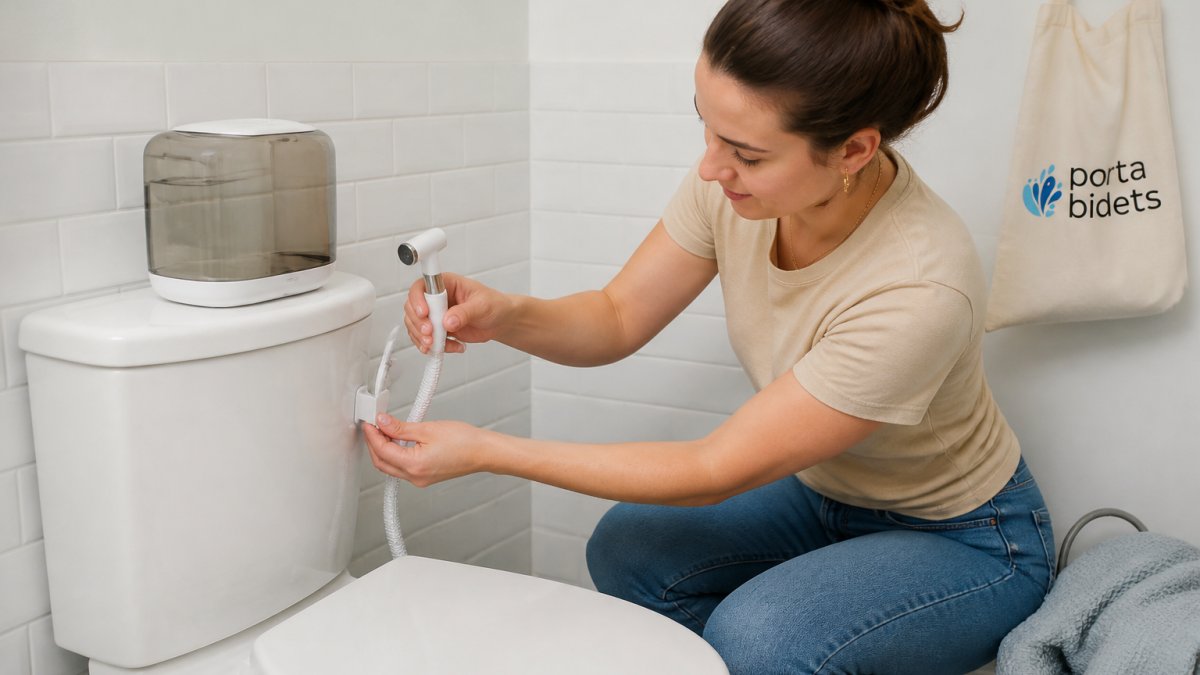
For renters, this is the lowest-risk path: nothing about your toilet changes, there is no hookup to reverse when you move out, and no chance of a leak soaking your floor and security deposit.
The PortaBidets Wand ($99.00) is a handheld bidet that needs no plumbing. It pairs with a pump and reservoir system for consistent, high-pressure cleaning at home or on the road. No installation required. The Portabidets Home is a bidet attachment that requires no plumbing. It uses the same pump and reservoir system as the Portabidets Wand.

The Traveler Portable Bidet ($149.00) takes this further. It mounts to the toilet in the front and offers four pressure modes, three wash types, and a 1.4L reservoir, working at home and in any hotel or Airbnb bathroom.
Where does this option fall short? You refill the reservoir and charge a battery instead of pulling endless water from the wall.
Rental Rules: Landlord Approval, Lease Terms, and Liability
Read your lease before you buy anything. Most rental agreements have an alterations clause, and plumbing work often counts even when temporary, a T-adapter you remove in ten minutes is still a modification to some landlords.
What most guides miss is that liability sits with you, not the landlord. If a supply hose leaks while you are at work, you may be on the hook for water damage to the unit below.
A simple approach:
- Check your lease for words like "alterations," "fixtures," or "plumbing"
- Email your landlord and describe exactly what you want to install
- Ask whether a removable attachment is acceptable
- Get the answer in writing before you order
If your landlord says no to anything touching the water line, the no-plumbing route is your answer. It sidesteps the whole conversation because nothing is altered.
Checking Toilet and Bathroom Compatibility Before You Buy
Compatibility is where most apartment bidet purchases go wrong, and the reason is mechanical.
Measure the bowl and the seat bolts first. Bidet seats and attachments come in round and elongated shapes and are not interchangeable.
Check the space behind the tank. You need clearance for a thin T-adapter between the tank inlet and the wall. A common failure is a toilet pushed so close to the wall that the adapter cannot thread on without kinking the supply hose.
Identify the toilet type, because this is where attachments fail.
- Two-piece toilet with an exposed tank: The easiest case. The tank sits on the bowl, the seat bolts are visible, and the supply line is reachable. Most attachments fit.
- One-piece toilet: The tank and bowl are molded as one unit. Seat bolts are usually still present, but the tank inlet may be recessed or angled, which can block a T-adapter.
- Tankless or concealed-tank toilet: There is no exposed tank and often no accessible supply line. A standard attachment has nothing to connect to. This is the case where a no-plumbing portable unit is the only path that works without a professional.
- Skirted or concealed-trap toilet: The base hides the plumbing. You may not be able to reach the shutoff valve at all.
Watch for unusual supply fittings. Most supply lines use a standard 3/8-inch compression fitting at the wall and a 7/8-inch connection at the tank.
For a portable, no-plumbing bidet, compatibility is far simpler: it mounts to the toilet or sits beside it. You do not need to match seat shape, find a spare inch behind the tank, or touch the supply line.
Bidet Attachment Installation: A Step-by-Step Guide
A DIY bidet attachment installation is a real plumbing job, but a small one. Plan for 30 to 45 minutes with an adjustable wrench, a screwdriver, and a towel.
Shut Off the Water and Disconnect the Supply Hose
Turn the toilet shutoff valve clockwise until it stops, the small valve on the wall behind the toilet. Flush once to drain the tank and confirm the water is off.
Place a towel under the tank. Use your wrench to loosen the coupling nut connecting the supply hose to the tank. Water will drip out, so keep the towel ready. Pull the hose free.
PortaBidets Wand – Handheld Bidet, No Plumbing Needed →
Install the T-Adapter and Reconnect the Water Line
Thread the T-adapter onto the tank inlet, then reconnect the supply hose to the adapter's bottom port. Tighten both by hand first, then snug with the wrench. Do not overtighten, plastic threads crack easily.
Mount the Bidet, Tighten, and Test for Leaks
Remove your toilet seat, slide the bidet attachment's mounting plate over the seat bolts, and set the seat back on top. Reinstall the nuts evenly, then connect the bidet's flexible tube to the open port on the T-adapter.
Now open the shutoff valve slowly. Watch every connection for a full minute. If you see a drip, tighten that joint a quarter turn and check again. Run the bidet through a full cycle before you call the job done.
How to Remove a Bidet Attachment When You Move Out
Removing a bidet attachment takes about 15 minutes and reverses everything you did. Turn off the water, disconnect the bidet's tube from the T-adapter, remove the seat and mounting plate, then reconnect the supply hose directly to the tank and tighten it.
Once the hose is back on the tank, open the valve and check for leaks at that single connection. If it is dry, you are done.
Two things to watch:
- Keep the original washers and nuts in a labeled bag so you can reinstall them
- Take a photo of the toilet before you start, so you know exactly how it looked
A no-plumbing portable bidet needs none of this. You lift it off the toilet and pack it. There is nothing to reverse and nothing for a landlord to inspect.
Common Mistakes and Troubleshooting in Apartment Bathrooms
The most common mistake is skipping the leak check. People open the valve, see no drip in five seconds, and walk away, but slow leaks take minutes to show, and a drip behind the tank can run for hours.
A careful leak-check procedure. After you open the shutoff valve, dry every joint with a paper towel. Watch the T-adapter, the tank inlet, and the bidet's tube connection for a full minute, then run one cycle and dry the joints again.
What to do if a connection drips. Close the shutoff valve, dry the joint, and inspect the threads.
Do not leave a new connection unattended. The first 24 hours are when a slow leak is most likely to appear.
Other problems and their fixes:
- Weak spray: Check that the bidet's inlet filter is not clogged. Hard water leaves deposits fast, and a clogged filter is the most common cause of a spray that fades over weeks.
- Water won't stop: Your shutoff valve may be stuck open or failing. This is common in older apartments and often needs a plumber, because a valve that will not close means water you cannot shut off.
- Seat won't sit flat: The mounting plate is off-center. Loosen the bolts, reposition the plate so it is centered on the bowl, and tighten evenly.
- Leak at the tank: The T-adapter is cross-threaded. Remove it, check the threads, and reinstall by hand before you use the wrench.
- No room behind the tank: Switch to a no-plumbing portable unit instead of forcing the fit. A kinked supply hose is a leak waiting to happen.
- Bidet runs but nothing sprays: The bidet's own inlet valve may be closed, or the tube is kinked. Check both before you assume a defect.
For apartment dwellers, the honest limit is the shutoff valve. If it will not close all the way, stop and call a licensed plumber. A broken valve means water you cannot shut off, and that is the one failure a renter cannot fix alone.
Conclusion: Pick the Setup That Fits Your Lease
The right bidet for your apartment comes down to one question: does your lease allow anything to touch the water line? If yes, a standard attachment is a manageable DIY job. If no, or your toilet is an odd fit, a no-plumbing portable bidet solves the problem without permission slips or risk.
PortaBidets makes that second path simple. Our Wand and Home models deliver real, high-pressure cleaning with no plumbing hookup, a rechargeable battery, and a mountable design that works at home or on the road. No tools, no T-adapter, no landlord conversation.
Shop Bidets and get the comfort of a home bidet without touching a single pipe.
Frequently Asked Questions
Can you install a bidet in an apartment without a plumber?
Yes. Most bidet attachments and bidet seats connect to the toilet's existing water supply with a T-adapter, a wrench, and about 30 minutes of work. The shutoff valve and supply hose stay in place, so no new plumbing lines are run. If your toilet has no accessible valve, a tankless toilet, or a one-piece design with no seat bolts, a no-plumbing apartment bidet that uses its own reservoir like Portabidets Home Bidet is the safer route because nothing touches the water line at all.
Do I need my landlord's permission to install a bidet?
Check your lease before buying. Many leases prohibit permanent alterations, and a plumbing-connected bidet attachment counts as a modification in some agreements even though it is reversible. A no-plumbing bidet for an apartment that mounts to the toilet without touching the water supply usually falls outside those clauses, but it is still worth a quick email to your landlord. Keep the written reply so there is no dispute at move-out.
How do you remove a bidet attachment when moving out?
Shut off the toilet's water supply, flush to empty the tank, and disconnect the supply hose from the T-adapter. Remove the T-adapter, reconnect the original hose to the shutoff valve, and tighten it by hand plus a quarter turn with a wrench. Unbolt the bidet from the seat bolts, put the original seat back, and turn the water on to check for drips. The whole removal takes about 15 minutes, and the toilet returns to its original setup.
Are portable bidets effective for everyday use?
They can be, depending on the model. Squeeze-bottle bidets rely on hand strength and deliver weak pressure, which is why many people give up on them. Rechargeable options like the PortaBidets Wand ($99) pair with a pump and reservoir system for consistent, high-pressure cleaning with no plumbing, and The Traveler ($149) mounts to the toilet with four pressure modes and a 1.4L reservoir. That makes them practical for renters, travelers, and anyone with limited hand strength.


