




Bidet for Cruises: Portable Options That Work
Table of Contents
- Why Standard Bidet Attachments Fail on Cruise Ships
- Can You Bring a Bidet for Cruises On Board?
- Portable Bidet for Travel: What to Look For
- Rechargeable Portable Bidet Options That Fit in a Carry-On
- How to Use a Portable Bidet in a Cruise Cabin Bathroom
- Hygiene, Drying, and Bathroom Cleanup at Sea
- Accessibility and Medical Considerations for Cruise Travelers
- Troubleshooting and Practical Limitations
- Frequently Asked Questions
Last Updated: October 6, 2026
Why Standard Bidet Attachments Fail on Cruise Ships
A standard bidet attachment needs a steady water line and a drain built for it. A cruise cabin has neither, so most plumbing-connected bidets for cruises simply cannot be installed on board, which is why a bidet for cruises has to work without a water line.
That's the short answer. The longer one is about how ship toilets actually work.
Cruise Ship Toilet Plumbing and Water Connections
Cruise ship toilets use a vacuum waste system, not the gravity system in your bathroom at home.
That matters for three reasons:
- Toilet paper must be the quick-dissolving kind, or it can clog the line
- Extra water going into the bowl can overwhelm the vacuum cycle
- There is no exposed supply line to tap for a bidet attachment
So a bolt-on bidet seat with a T-connector is off the table.
Here's the part most people get wrong: the problem isn't the toilet seat. It's the water source. A portable bidet for travel solves that because it carries its own water.
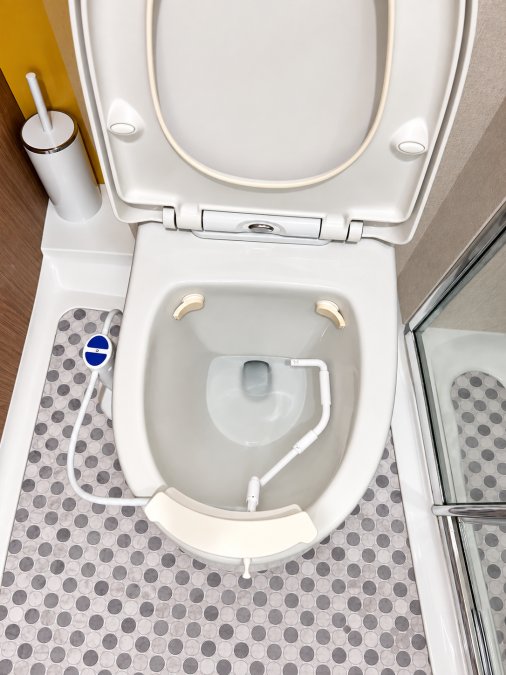
The Traveler Portable Bidet – Toilet-Mounted Travel Bidet on a cruise ship bathroom. Royal Carribbean Icon of the Seas.
CDC guidance on cruise ship sanitation and vessel sanitation program
Can You Bring a Bidet for Cruises On Board?
Yes, in most cases. A portable bidet is treated like any other personal hygiene item in your luggage, and it does not need to be declared as a restricted item.
But rules vary by line, so check before you pack.
Cruise Line Rules and Security Screening
Security screening looks for prohibited items: weapons, flammables, and certain electronics. A handheld or squeeze-bottle bidet raises no flags. It's a plastic bottle or a small rechargeable device.
A few practical notes:
- Battery-powered bidets go in carry-on, not checked bags, per standard airline rules
- Keep the device drained and dry so it doesn't leak on other passengers' luggage
- Check your cruise line's prohibited items list if you're unsure
Most travelers never get a second look.
TSA rules on lithium batteries in carry-on baggage
Portable Bidet for Travel: What to Look For
The best portable bidet for travel balances pressure, water capacity, and size against the realities of a cabin bathroom. Weak spray is the number one complaint about cheap squeeze bottles, so pressure should be your first filter, but on a ship, three cruise-specific constraints matter just as much: reservoir size versus counter space, charging versus outlet availability, and how the device sits on a deep-lipped ship toilet.

Here's the selection framework that separates a device you'll actually use from one that sits in a drawer:
- Spray pressure and control. Squeeze bottles depend on hand strength and fade as the bottle empties. Rechargeable pumps deliver steady pressure, and adjustable modes let you dial back for sensitive areas.
- Water capacity. A small reservoir means constant refills, and cabin sinks are tiny.
- Mounting and stability. A device that sits on the toilet rim frees both hands. A handheld unit works, but you hold it the whole time, awkward in a compact bathroom.
- Charging and battery life. If you're at sea for several days, a device that needs daily charging is a liability. Check the rated runtime and bring a power bank as backup.
- Nozzle reach and seat fit. Ship toilets often have a deep front lip that catches a wand. Measure the gap or plan for a spacer.
- Waterproofing and cleaning. Bathrooms stay damp. The housing should tolerate splashes.
- Footprint when stored. It has to fit in a carry-on and tuck beside the toilet without blocking the door swing.
Manual Squeeze Bottles vs. Rechargeable Portable Bidets
Manual squeeze bottles are cheap and simple. You fill them, you squeeze, you get a weak spray that fades as the bottle empties.
Rechargeable portable bidets use a pump to push water at steady pressure. That's the difference between a watering can and a shower head. The trade-off is weight, charging, and cost.
Feature |
Squeeze Bottle |
Rechargeable Bidet |
|---|---|---|
Spray pressure |
Depends on hand strength |
Consistent, adjustable |
Water capacity |
Small, frequent refills |
Larger reservoir |
Hand strain |
High |
Low |
Charging |
None |
Periodic, needs outlet or power bank |
Best for |
Occasional backup use |
Daily use, limited mobility |
If you have arthritis or weak grip, a squeeze bottle will fight you every time. A rechargeable model won't.
Rechargeable Portable Bidet Options That Fit in a Carry-On
Size is the whole game when you're packing for a cruise.
Our pick is The Traveler Portable Bidet. It mounts to the toilet for your whole stay instead of being held in your hand.
That capacity matters on a ship. You're not chasing a refill mid-use.
Two add-ons are worth knowing about:
The Traveler Portable Bidet – Toilet-Mounted Travel Bidet →
- The Cruise Ship Toilet Spacer lifts the front lip of deep-toothed seats so the wand glides instead of catching. Cruise cabin toilets often have that deep front lip.
- The 5L Water Bag set adds extra water if you like a longer wash. You fill it, set it behind the toilet, and run the hose into it.
For storage between ports, the water-resistant carrying bag keeps a damp device away from the rest of your luggage.
The Wand may be a good add on as sometimes the toilets on the cruise ships differ and the track on the Traveler may be hard to install and/or not stick properly due to slanted toilets. The Wand is a nice backup so that you can see get the pressure from the pump and the large water tank from an extra long handheld device.

How to Use a Portable Bidet in a Cruise Cabin Bathroom
Setup takes about two minutes. Fill the reservoir, mount the device on the toilet, and you're ready. No tools, no plumbing, no landlord permission.
Here's the step-by-step:
- Fill the reservoir with water at the temperature you want. Cabin taps run cold, so if you prefer warm water, fill from the sink and let it sit, or top off with a little hot water from the tap. Never use water hot enough to scald.
- Set the device on the toilet rim or mount it in place. Confirm it's stable before you sit, a wobble mid-use is how water ends up on the floor.
- Add the toilet spacer under the front lip if the seat has a deep edge, so the wand glides instead of catching.
- Adjust the spray pressure to your comfort level before you start. Begin low and increase; you can always add pressure, but you can't undo a surprise blast.
- Aim from front to back and work in short passes rather than one long spray. This uses less water and gives you better control in a tight space.
- Pat dry with a small towel or toilet paper. A dedicated microfiber cloth dries faster and cuts paper use.
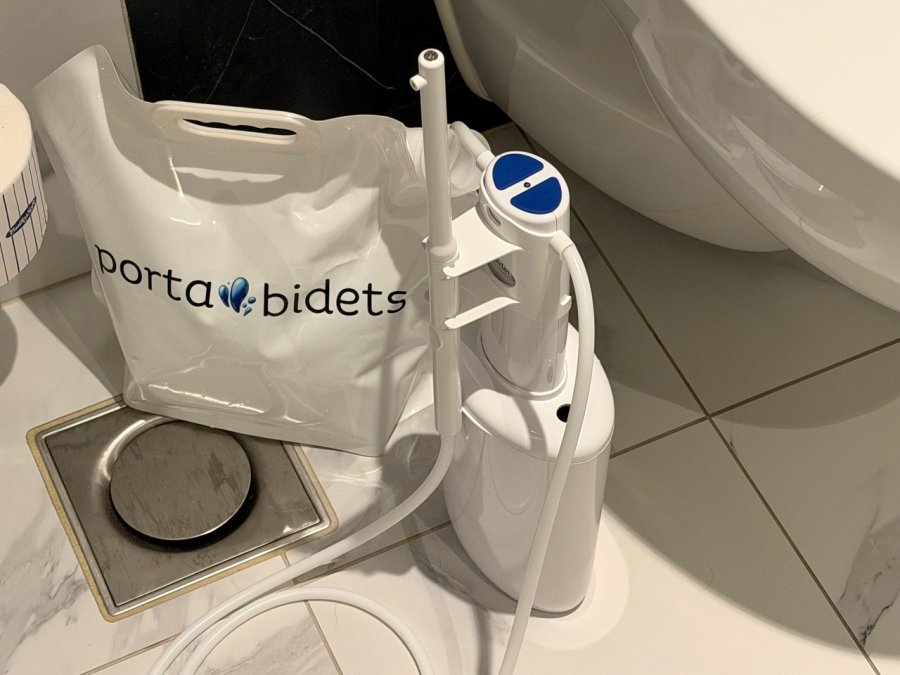
Portabidet Wand with Extra Water Bag
Cabin bathrooms are tight. Keep the reservoir on the floor beside the toilet, not on the tiny sink counter, so you don't knock it over.
Refilling and Water Management at Sea
If you need more, refill from the sink rather than the shower, and keep a spare container of water within reach so you're not making multiple trips.
Storing Between Uses
Rinse the nozzle, drain the reservoir, and wipe the housing after each use. Store the device in a water-resistant bag so damp parts don't touch your clothes, and leave the reservoir open to air-dry overnight. If you're moving between cabins or packing for a port day, drain completely,
Hygiene, Drying, and Bathroom Cleanup at Sea
Cleanup is simple if you build a small routine. Rinse the nozzle after each use, drain the reservoir, and wipe the device down before you pack it.
A few habits that keep things tidy in a small cabin:
- Keep a small microfiber cloth for drying the device and the seat
- Empty and air-dry the reservoir overnight
- Store everything in a water-resistant bag so damp parts don't touch your clothes
You're reducing toilet paper use, which is a real plus on a ship. Less paper in the vacuum system means fewer clogs and less waste.
Accessibility and Medical Considerations for Cruise Travelers
For travelers with limited mobility or medical needs, a portable bidet is often the difference between comfort and discomfort on a trip.
A toilet-mounted rechargeable bidet removes the need to bend or twist. You press a button, adjust the pressure, and you're done. No squeezing, no strain.
If you have a medical condition that affects hygiene, talk to your doctor before you travel and confirm any cabin accessibility features with your cruise line in advance.
ADA guidance on accessible travel and accommodations
Troubleshooting and Practical Limitations
Most problems come down to three things: low pressure, a blocked wand, or a dead battery. Each has a simple fix.
- Weak spray. Check the nozzle for mineral buildup and rinse it. Refill the reservoir if it's low.
- Wand catching on the seat. Add the toilet spacer under the front lip.
- Battery dying mid-trip. Charge it fully before you leave and bring a power bank.
- Leaks in your bag. Drain and dry the device before packing it.
The honest limitation: a portable bidet is not a plumbed-in home unit. You refill it, you charge it, and you empty it. That's the trade-off for something that works in a cabin with no water line.
For most cruisers, that trade is worth it.
Frequently Asked Questions
Can you bring a portable bidet on a cruise?
Yes, a portable bidet is generally allowed in carry-on or checked luggage because it contains no prohibited items. Battery-powered models should go in your carry-on if they use lithium batteries. Check your specific cruise line's policy on personal hygiene devices before you pack, and keep the device in its original packaging or a water-resistant carrying bag for easy screening at security.
How do you use a portable bidet in a cruise ship bathroom?
Fill the water reservoir with warm water before you enter the bathroom, since cruise cabin sinks are small. Mount the bidet on the toilet seat or hold it in place, then aim the spray nozzle and use the adjustable spray to clean. Empty any remaining water, wipe the device dry, and store it in a water-resistant bag. A toilet spacer can help if the seat has a deep front lip that blocks the wand.
What should you look for in a travel bidet for a cruise?
Look for a rechargeable portable bidet with adjustable spray pressure, a water reservoir of at least 1.4 liters, and a compact design that fits in a carry-on. Check that it mounts securely on different toilet shapes, since cruise cabin toilets vary. A model with a long battery life gives you more comfort on longer trips without needing to recharge mid-voyage.
Are there downsides to using a portable bidet on a cruise?
The main limitations are water capacity and battery life. A 1.4-liter reservoir may run out if you prefer heavy water use, so consider a 5-liter water bag for longer use. You also need to refill from the cabin sink, which can be small. Some cruise toilets have deep-front seat lips that catch the bidet wand, but a toilet spacer solves that problem for a few dollars.
Packing for a cruise shouldn't mean giving up the comfort of a bidet at home. PortaBidets builds no-plumbing bidets with rechargeable pressure, a compact mountable design, and a complete system that works in a cabin, a hotel, or your own bathroom. With 184 reviews and a start on Kickstarter, we've helped travelers keep their routine wherever they go. Get started with PortaBidets and bring your home-level clean on board.


