




Wipe Before or After Using a Bidet: A How-To Guide
Table of Contents
- The Short Answer: Wipe Before or After Using a Bidet
- Step-by-Step: How to Use a Bidet Correctly
- Do You Need to Wipe After Using a Bidet?
- How to Dry Off After Using a Bidet
- How to Use a Bidet as a Woman
- Portable Bidet Use: Key Differences and Tips
- Common Mistakes to Avoid When Using a Bidet
- Frequently Asked Questions
Last Updated: October 11, 2026
The Short Answer: Wipe Before or After Using a Bidet
After. We don’t like to smear first! We recommend: using water to clean, then spot check with toilet paper, maybe spray again or maybe you are clean and can just dry with toilet paper or some like to use a washcloth.
The exact order varies by personal preference. Some skip pre-wiping for light rinses; others always pre-wipe for confidence. A bidet rinses and cleans but doesn't replace all wiping.
Step-by-Step: How to Use a Bidet Correctly
Using a bidet correctly takes practice, but the process is straightforward. Below, we'll walk through each stage so you feel confident the first time.
Step 1: Position Yourself Over the Toilet
Sit on the toilet as normal. Ensure you're sitting firmly and stable before turning on the water to prevent splashing or poor coverage.
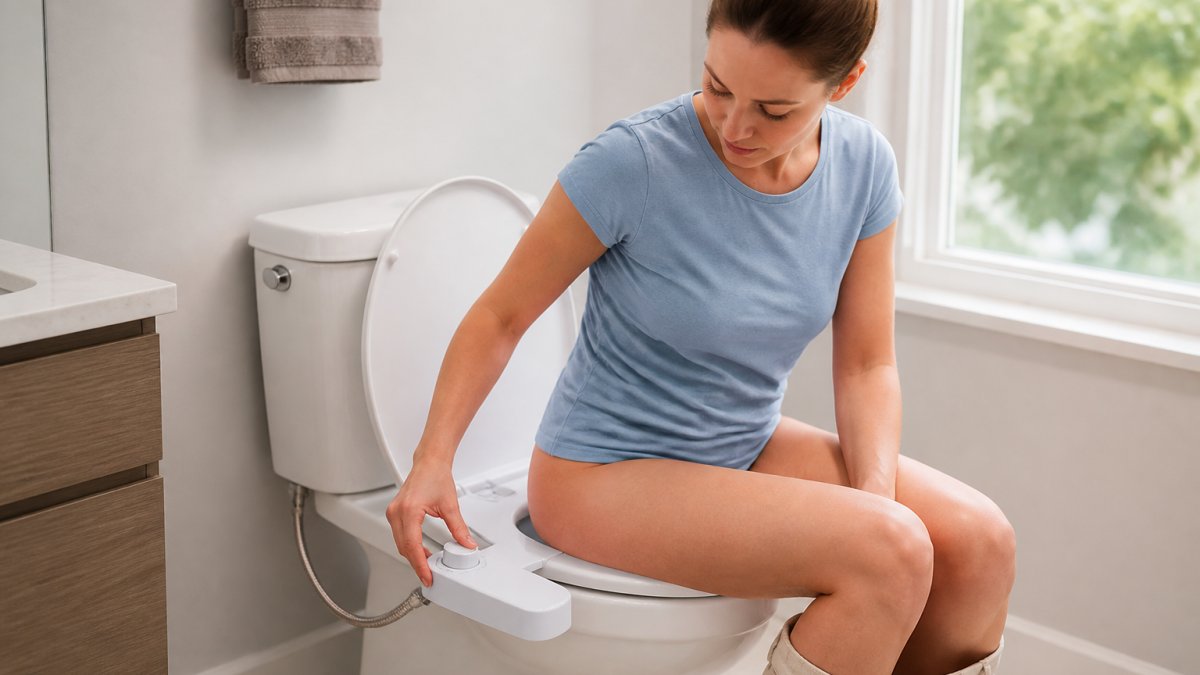
Person sitting on toilet with home bidet attachment, hand reaching toward water pressure control dial, modern bathroom with natural light from window
Step 2: Adjust Water Pressure and Spray Position
Start with low pressure to avoid discomfort and splashing. Most bidets have adjustable nozzles, angle the spray to target the area without overshooting.
Step 3: Rinse Thoroughly
Let the water run for 10-20 seconds, moving slightly if needed for full coverage. Turn off the water when you feel clean.
Step 4: Spot Check and Dry
Use a little bit of toilet paper to wipe to check for cleanliness and dry.
Do You Need to Wipe After Using a Bidet?
Yes, most people wipe after bidet use to verify cleanliness and remove excess moisture.
Why Post-Wipe Matters
After rinsing, gently wipe with a single sheet of toilet paper to verify cleanliness and remove excess moisture. If the paper comes away clean, you're done. If you see residue, rinse again for 10-15 seconds and re-check.
Wiping Technique After Rinsing
Post-rinse wiping is gentler than pre-wiping. Pat gently rather than scrubbing, wipe away from the front to prevent bacteria movement, and use one or two sheets. Skip the post-wipe if irritation occurs and move to air-drying or a soft towel.
When to Skip the Post-Wipe
Similarly, a designated soft bidet towel can replace the paper verification step, though many users prefer a quick paper check for peace of mind.
Post-Wipe and Sensitive Skin
If you have hemorrhoids, postpartum recovery needs, or generally sensitive skin, post-wiping should be especially gentle. Consider using a soft, damp cloth or a dedicated bidet towel instead of toilet paper for the final pat-dry. Toilet paper, even when wet, can feel rough on irritated skin. A soft cloth or towel is kinder and still removes moisture effectively.
How to Dry Off After Using a Bidet
Drying is the final step, and it's where many bidet users struggle. After rinsing, you're wet, and you need a way to get dry. The method you choose depends on your setup, comfort level, and whether you prioritize convenience or sustainability.
Air Drying
Air drying takes 2-5 minutes. If you have time and a bidet seat with a built-in air dryer, this is the easiest and most hands-off option.
Pros: No supplies needed, no cleanup, completely hands-free. Cons: Takes several minutes, not practical for portable bidets, and some users find the warmth uncomfortable in summer.
Toilet Paper
Toilet paper is the most common drying method and works fine for most situations. Use a few sheets to pat the area dry after your post-rinse verification wipe.
Pros: Disposable, familiar, available everywhere, quick. Cons: Creates waste, can feel rough on sensitive skin, requires a constant supply.
For travel and public restrooms, toilet paper is the practical default.
Designated Bidet Towels
A reusable bidet towel is eco-friendly and often more comfortable than paper, especially for sensitive skin. However, keeping a bidet towel sanitary requires discipline and proper maintenance.
How to use a bidet towel safely:
- Choose the right towel. Use a small, dedicated towel (roughly 12 × 18 inches) in a dark color. Dark fabrics hide stains and make it easier to spot when the towel needs washing. Avoid white or light colors, which show discoloration and can feel less hygienic psychologically.
- Designate it clearly. Label the towel or store it in a specific location so no one else uses it by mistake. Many households keep a bidet towel in a small basket or hook directly next to the toilet.
- Pat, don't rub. Use gentle patting motions to dry, not vigorous rubbing. This reduces wear on the towel and is gentler on skin.
- Wash frequently. Wash the towel at least once per week, ideally twice if you use it daily. Use hot water and standard detergent. Some users prefer to wash it every 3-4 days for extra peace of mind. Do not share washing loads with other household linens if you're concerned about cross-contamination.
- Air-dry the towel. Hang it in a well-ventilated area to dry completely between uses. A damp towel left in a pile will develop mildew and odor. If your bathroom lacks ventilation, consider a towel rack near a window or a heated towel rack.
- Replace regularly. Even with proper care, bidet towels wear out. Replace yours every 6-12 months, or sooner if it shows signs of thinning, staining, or odor that washing doesn't remove.
Pros: Reusable, soft, eco-friendly, cost-effective over time. Cons: Requires regular washing, takes up space, less practical for travel or shared bathrooms, and some people feel uncomfortable with the hygiene aspect despite proper maintenance. Maintaining these items requires a commitment to proper washing methods, a practice that remains essential for anyone incorporating reusable textiles into their daily hygiene routine.
Paper Towels
Paper towels are thicker and more absorbent than toilet paper, making them effective for drying. They're disposable and work well as a middle ground between toilet paper and a reusable towel.
Pros: More absorbent than toilet paper, disposable, familiar. Cons: More expensive than toilet paper, creates waste, not as soft as a dedicated towel.
Paper towels are a good option if you want something sturdier than toilet paper but don't want to commit to a reusable towel.
Choosing Your Drying Method
At home, a bidet towel or air dryer is practical and sustainable. While traveling, toilet paper or paper towels work best because they're portable and disposable. In shared bathrooms or offices, stick with toilet paper or paper towels to avoid hygiene concerns.
Many users combine methods: they use a bidet towel at home for comfort and sustainability, but keep toilet paper as a backup for guests or situations where the towel is in the wash. Experiment with what feels right for your situation.
How to Use a Bidet as a Woman
Women have different anatomy, so the approach to bidet use differs slightly. The goal is the same, clean and dry, but the technique matters more.
Always rinse from front to back. This prevents bacteria from the back area from moving forward. The water stream should flow away from the front, not toward it.
For front cleaning, angle the nozzle carefully. The spray should target the area without overshooting. If you're using a portable bidet, test the angle before turning on full pressure.
Back cleaning follows the same steps as for anyone else. Sit normally, adjust the spray, and rinse for 10-20 seconds.
After rinsing, pat dry with toilet paper or a designated towel. Check for cleanliness before moving on. Women often appreciate the gentleness of a bidet compared to wiping, especially during sensitive times.
Portable Bidet Use: Key Differences and Tips
Portable bidets work differently than built-in bidet seats. Understanding these differences helps you use one effectively.
Setup is instant. No plumbing, no installation. Mount it on your toilet, fill the tank, and you're ready. This makes portable bidets perfect for renters, travelers, and anyone who doesn't want permanent changes.
Water pressure varies by model. Cheap squeeze bottles deliver weak spray. PortaBidets uses rechargeable pressure to deliver a strong, concentrated stream that actually cleans. This is the difference between a toy and a real bidet.
Tank capacity matters for travel. Larger tanks mean fewer refills. Smaller tanks are more compact for packing. Choose based on your needs.
Mounting should be secure. The bidet shouldn't shift or wobble when you sit. Test it before using. Most portable bidets attach to the rim or seat and stay stable.
Refilling is simple. Use tap water. Some people add a filter if they're concerned about water quality. Most don't bother.
For frequent travelers, a portable bidet is a game-changer. You maintain the same hygiene routine everywhere. Hotel toilets, Airbnbs, RVs, your bidet works the same way.
Common Mistakes to Avoid When Using a Bidet
Starting with high pressure. New users often crank the dial to maximum. This causes splashing, discomfort, and mess. Always start low and increase slowly.
Assuming you're clean without checking. A quick wipe with paper confirms cleanliness. Don't skip this step.
Using the wrong angle. The spray should target the area directly. Angling it wrong means poor coverage. Adjust before turning on full pressure.
Forgetting to dry. Staying wet is uncomfortable. Always have a drying method ready, whether it's paper, a towel, or an air dryer.
Not securing the portable bidet. A wobbly bidet is unsafe and uncomfortable. Make sure it's mounted tightly before use.
Overthinking the process. Bidet use becomes second nature after two or three tries. Don't stress about perfection. You'll figure out what works for your body quickly.
Using a bidet takes practice, but it's easier than most people think. Our rechargeable, portable design lets you maintain real bidet hygiene anywhere, home, hotels, or the road. Shop Bidets
Frequently Asked Questions
Do you wipe before or after using a bidet?
This is a personal preference. Some users wipe first to remove excess waste, then rinse with the bidet's water stream. The amount of pre-wiping depends on the situation. Some users don't want to smear first and just go for the water first. After rinsing, you may need a final wipe with toilet paper or use an air dryer or towel to dry off. The exact order depends on your bidet type and personal preference.
Do you need to wipe after using a bidet?
Whether you wipe after using a bidet depends on your drying method. If you use toilet paper to check for cleanliness and absorb remaining wetness, then yes. If you use a dedicated bidet towel, you may skip post-wipe wiping entirely. Many users do a final light wipe with toilet paper to verify they're clean and to remove excess moisture before standing.
How do you dry off after using a bidet as a woman?
Women have two main drying options: toilet paper (the most common) or a designated bidet towel kept separate from regular towels. Always wipe from front to back to prevent bacteria spread. Reusable towels are eco-friendly but must be washed regularly. Choose the method that feels most comfortable and hygienic for your situation.
Will a portable bidet work on any toilet?
Portable bidets like those from PortaBidets are designed to fit most common toilet types, but unusually shaped or very narrow toilets may present challenges. Always verify compatibility with the product specifications.


