




How to Decide if a Portable Bidet Is Worth It
Last Updated: October 28, 2026
Quick Summary
A portable bidet is worth it if you want a thorough water rinse in any restroom without plumbing, tools, or landlord permission. Frequent travelers, renters, RV owners, and people with limited hand strength get the most out of one. Choose a battery-powered pump model for steady pressure and larger capacity, or a manual squeeze bottle for light use and short trips.
- Manual squeeze bottles typically cost $15-$40 and hold 300-500 mL, enough for maybe one rinses per fill.
- Battery-powered pump models typically cost $60-$150 and hold 1.0-1.5 L, enough for two-three rinses per fill.
- A realistic target is cutting toilet paper use by half to two-thirds, not eliminating it entirely.
Table of Contents
- What a Portable Bidet Actually Does (and Who It's For)
- Portable Bidet Pros and Cons: The Honest Breakdown
- Portable Bidet vs Toilet Paper: Cost, Clean, and Convenience
- Bottle Squeezers vs Battery-Powered Models: What the Pressure Difference Means
- How to Use a Portable Bidet Without the Learning Curve
- The Best Portable Bidet Setup for Travelers, Renters, and RV Owners
- Pick Your Portable Bidet Setup
- Frequently Asked Questions
What a Portable Bidet Actually Does (and Who It's For)
A portable bidet is a compact, refillable washing device that delivers a directed stream of water for cleaning after using the toilet, without any plumbing connection. It replaces dry wiping with rinsing, and it packs into a bag or suitcase. At PortaBidets, we built our whole business around one question: can a travel bidet actually match the clean you get at home?
Who gets the most out of one? Four groups, mostly:
- Frequent travelers who hate the drop-off in hygiene between home and a hotel room
- Renters whose lease rules out installing a permanent bidet attachment
- RV owners and campers who want a real wash without hookups
- People with limited mobility or hand strength who find squeezing a bottle difficult
The Cleveland Clinic's overview of bidet hygiene benefits is a fair starting point on why rinsing beats wiping for skin comfort. If you have never used one, the learning curve is shorter than you'd guess, and we'll get to that.
Portable Bidet Pros and Cons: The Honest Breakdown
Here's the honest version, including the parts that aren't flattering.
Pros:
- Cleans more thoroughly than dry paper alone
- Works in any restroom, hotel, or Airbnb with a toilet
- No installation, no tools, no landlord permission
- Cuts toilet paper use over time
- Compact and packable for travel
Cons:
- You have to fill a reservoir
- Cheap squeeze bottles deliver weak, uneven pressure
- Adds a small routine to your bathroom habit
A squeeze bottle and a battery-powered pump are not the same product. For a deeper look at whether these devices genuinely clean well, read our honest review of whether portable bidets are effective.
Portable Bidet vs Toilet Paper: Cost, Clean, and Convenience
Toilet paper is already in the bathroom. Here's the math, with the assumptions stated so you can plug in your own.
The Cost-Per-Use Comparison
What the math does not support is the claim that a portable bidet eliminates paper entirely. Most users keep some paper on hand for patting dry and for guests. A realistic target is cutting paper use by half to two-thirds, not to zero. Run your own numbers with that assumption and the payback window roughly doubles, still short, still real.
Cleaning: What the Water Actually Does
Paper leaves residue; water rinses it away. That difference matters most for comfort during travel, after spicy food, and for anyone with sensitive skin. The Cleveland Clinic's overview of bidet hygiene benefits is a fair plain-language starting point on why rinsing beats wiping for skin comfort. The practical takeaway: a rinse plus a pat-dry gets you cleaner with less friction than paper alone, and friction is what most people are actually feeling when they complain about paper. Prioritizing this level of personal hygiene often leads to a broader reevaluation of travel gear investments, including how one manages the bulk and organization of packed belongings.
Convenience: The Honest Trade
If you want the full side-by-side, our breakdown of portable bidet vs toilet paper covers cost, cleaning, and daily routine in detail. The U.S. EPA's information on reducing household paper waste is worth a read if waste reduction is part of your motivation.
Bottle Squeezers vs Battery-Powered Models: What the Pressure Difference Means
Portable bidets split into two real categories, and the split isn't cosmetic, it changes pressure, capacity, setup time, and who can operate the device at all. Treating them as one product is the most common buying mistake.
Manual Squeeze Bottles
A squeeze bottle is a soft reservoir with a bent nozzle. You fill it, invert it, aim, and squeeze. Pressure comes entirely from your hand, and it fades as the bottle empties because there's less water mass behind the stream.
- Capacity: typically 300-500 mL, enough for roughly one to two rinses per fill.
- Pressure: peaks at whatever your grip generates, then drops off through the squeeze.
- Setup: fill, cap, aim, under 30 seconds.
- Cost: typically $15-$40.
- Best for: light use, short trips, backup in a bag, and anyone who wants zero charging or batteries.
- Weak point: repeated squeezing is the hardest part of the routine, which is exactly the wrong demand for anyone with arthritis, carpal tunnel, or limited grip strength.
Battery-Powered Pump Models
A pump model pairs a reservoir with a small electric pump and a nozzle. You press a button and get a steady stream from full to empty, usually with two to four pressure settings.
- Capacity: typically 1.0-1.5 L, enough for roughly three to five rinses per fill.
- Pressure: holds steady across the whole reservoir because the pump, not gravity and hand strength, drives the stream.
- Setup: fill, mount or hold, press, under a minute, plus charging every week or two of daily use.
- Cost: typically $60-$150.
- Best for: daily use, travel where you'll use it multiple times a day, shared households, and anyone with limited hand strength.
- Weak point: you have to remember to charge it, and a dead battery mid-trip is the pump model's version of running out of paper.
The Decision Rule
Our rechargeable models run on a pump and reservoir system rather than hand strength. If you're weighing the upgrade, our article on whether a high-pressure rechargeable bidet is worth it walks through the trade-offs.
The Traveler Portable Bidet | Toilet-Mounted Travel Bidet →
The two categories differ on the specs that decide whether a portable bidet fits your routine.
Spec |
Manual squeeze bottle |
Battery-powered pump |
|---|---|---|
Capacity |
300-500 mL |
1.0-1.5 L |
Rinses per fill |
Roughly one |
Roughly two to three |
Pressure |
Peaks at your grip, then drops off |
Holds steady from full to empty |
Setup time |
Under 30 seconds |
Under a minute, plus charging |
Cost |
Typically $15-$40 |
Typically $60-$150 |
Best for |
Light use, short trips, backup in a bag |
Daily use, shared households, limited hand strength |
Weak point |
Repeated squeezing is hardest part |
Remembering to charge it |
How to Use a Portable Bidet Without the Learning Curve
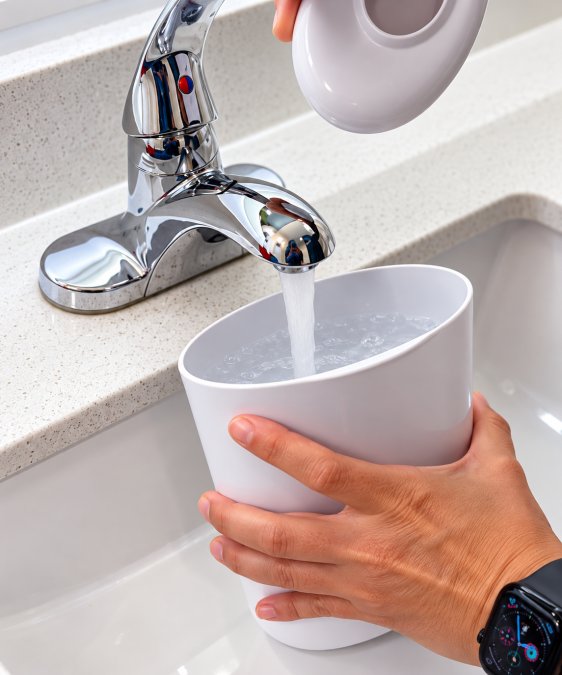
Watch out: overfilling the reservoir before mounting it can spill water on the bathroom floor. Fill at the sink, cap it, then mount.
The Best Portable Bidet Setup for Travelers, Renters, and RV Owners
The right setup depends on where you'll use it most, not on which model has the longest feature list.
Our Traveler portable bidet has four pressure modes, three wash types, and a 1.4L reservoir.

The PortaBidets Home bidet pairs the Traveler pump and water reservoir with a bidet seat attachment.

The Traveler Toilet Mount Kit converts a home setup into a mounted travel system using a reusable microsuction mounting system.

If you're not sure which fits, browse the full lineup of no-plumbing bidets for renters and travelers and match it to your situation.
Storage, Cleaning, and Travel Rules to Know
Empty the reservoir before you pack it. Water left in a sealed container between trips gets stale and smells. Wipe the nozzle after each use, and let parts air-dry fully before they go back in the bag.
Watch out: packing a damp reservoir in a suitcase is the fastest way to a musty smell on arrival. Dry it first.
For air travel, the TSA rules on liquids in carry-on baggage apply to any water you're carrying, so travel with the reservoir empty and fill at your destination.
Pick Your Portable Bidet Setup
The real question isn't whether a portable bidet is worth it in the abstract. It's whether it fits how you actually live.
We'd steer you toward a pump-powered system. Our products provide rechargeable water pressure in a compact, mountable design, with no plumbing or tools required for installation.
Get started with PortaBidets and bring a real bidet clean to every bathroom you use.
Frequently Asked Questions
Do portable bidets actually work?
The Traveler is a portable bidet with four water pressure modes. Its listing describes it as a way to travel with the comfort of your home setup.
Is a portable bidet worth packing while traveling?
The Traveler ($149.00) is a portable bidet with a 1.4L reservoir and four water pressure modes. The PortaBidets Wand is a handheld bidet priced at $99.00.
How do you use and clean a portable bidet?
Fill the reservoir with warm or cold water, mount or hold the unit, and aim the nozzle at a rearward angle before turning on the spray. Adjust pressure to the lowest setting first, then rinse and pat dry. After each use, run clean water through the nozzle, wipe the wand with a disinfecting wipe, and let all parts air-dry fully before packing. Never store a sealed unit wet, since trapped moisture encourages buildup.
Do I still wipe after using a portable bidet?
Most users pat dry rather than wipe. A bidet rinse removes residue that toilet paper smears around, so a quick dry with a small towel or a few squares of paper finishes the job. This is also where the cost case builds: a bidet cuts paper use sharply, and the rinse leaves a cleaner feeling than paper alone. Keep a dedicated drying cloth in your travel kit.


