




How to Clean With a Portable Bidet: 2026 Guide
Table of Contents
- What You'll Need Before You Start
- Step-by-Step: How to Clean With a Portable Bidet
- Portable Bidet Hygiene Tips for Daily Use
- How to Sanitize a Travel Bidet Between Trips
- Nozzle Hygiene, Mildew Prevention, and Water Quality
- Portable Bidet vs Toilet Paper: Which Keeps You Cleaner?
- Common Mistakes That Cause Bacterial Growth
- Frequently Asked Questions
Last Updated: September 24, 2026
What You'll Need Before You Start
Cleaning yourself with a portable bidet takes about two minutes once you have the right setup. The gear matters more than most people expect, because a weak stream or a dry reservoir turns a simple job into a frustrating one.
Here's what to gather before you start:
- A portable bidet with a full water reservoir
- Warm water, tested on your wrist first
- A small bottle brush for nozzle cleaning
- Mild, unscented soap for the exterior
- A soft cloth or towel for drying
- Distilled white vinegar for deep cleaning
The fix is simple: use a model with a rechargeable pump and a real reservoir, not a hand-squeezed bulb.
One more thing. Keep a dedicated cleaning kit in your travel bag. It saves you from hunting down supplies in a hotel room at midnight.
Step-by-Step: How to Clean With a Portable Bidet
Learning how to clean with a portable bidet comes down to three phases: fill, position, and dry. Each one takes under a minute once you've practiced it a couple of times. The difference between a clean result and a frustrating one is in the mechanics of each phase, not the gear.
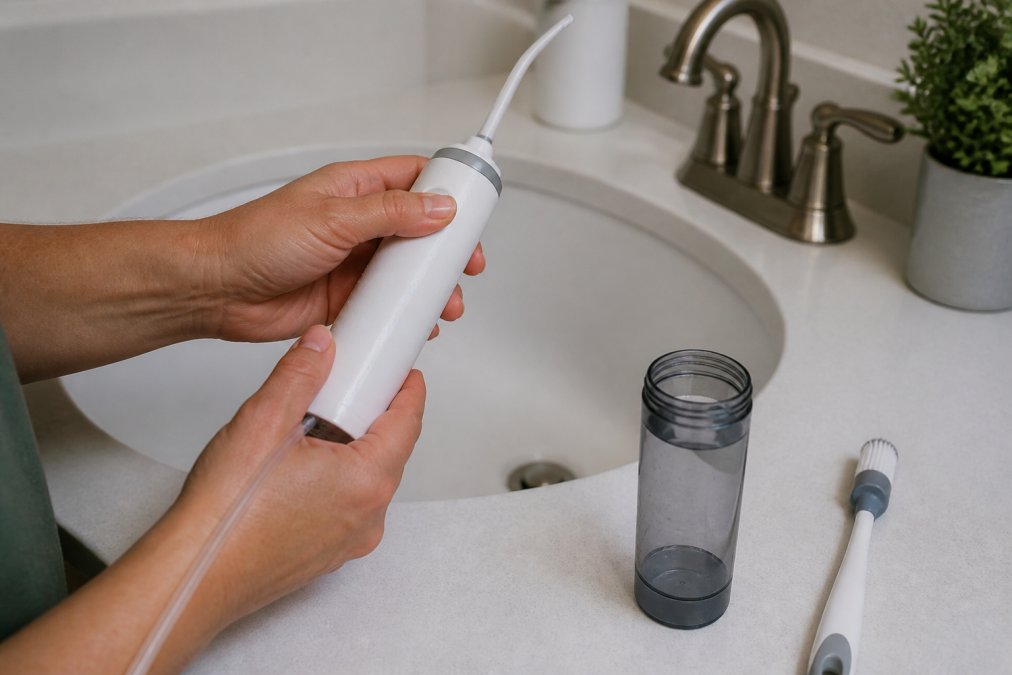
Filling the Reservoir and Setting Water Temperature
Fill the reservoir with warm water, not hot. Test it on your inner wrist before you use it, the same way you'd check a baby bottle. If it feels neutral against your wrist, it's safe for sensitive skin.
Cold water works, but warm water relaxes the muscles and cleans more comfortably. Skip anything above lukewarm, since sensitive skin reacts badly to heat. A practical target is water that feels barely warm to the touch, roughly the temperature of a comfortable bath.
If your model has multiple pressure modes, start on the lowest setting.
Positioning, Flow Control, and Drying
Mount the unit on the toilet rim if your model supports it, or hold the wand at a slight downward angle. Aim the stream toward the back, then adjust forward as needed. The downward angle matters: it lets gravity carry water away from the body instead of pooling.
Troubleshooting the Three Most Common Problems
Weak or sputtering stream. On a squeeze bottle, this usually means the reservoir is low or the nozzle is partially clogged with mineral scale. Refill and run a vinegar soak (see the sanitizing section). On a pump model, check that the battery is charged and the intake tube isn't pinched.
Ergonomics for Limited Mobility and Seniors
If grip strength or reach is a challenge, a rechargeable pump model with a long wand removes the need to squeeze and lets you keep your hand in a comfortable position. A rim-mounted design is easier still, because the unit holds its own position and you only guide the angle. Keep the reservoir on a counter or low shelf rather than lifting a full bottle from the floor, and pre-fill before you sit down so you're not handling water mid-use.
Portable Bidet Hygiene Tips for Daily Use
Daily habits keep a portable bidet hygienic between cleanings. A few small routines go a long way.
- Rinse the reservoir after every use
- Empty leftover water before storing
- Wipe the nozzle with a clean cloth
- Let all parts air dry fully before packing
- Never share the unit without sanitizing it first
How to Sanitize a Travel Bidet Between Trips
Sanitizing a travel bidet means a deeper clean than your daily rinse. Do this before and after every trip, and anytime the unit sits unused for more than a week. Most guides stop at "soap and water" or a quick vinegar rinse. That handles residue, but it doesn't address the two things that actually matter for long-term use: killing what's growing inside, and dealing with the water you put in.
Here's the routine:
- Disassemble the reservoir, wand, and tubing
- Mix one part distilled white vinegar with three parts warm water
- Soak the silicone and plastic parts for 15 to 20 minutes
- Scrub the nozzle with a small bottle brush
- Rinse everything with clean water
- Air dry on a towel in a well-ventilated spot
Disinfection Protocols Beyond Soap and Water
Vinegar is a maintenance cleaner, not a sterilizer. For a true disinfection pass, especially after illness or a long trip, consider these travel-friendly options:
- Hydrogen peroxide (3%, the standard first-aid strength). Dilute it and use it as a short-contact rinse on hard plastic and silicone parts, then rinse thoroughly with clean water. It breaks down into water and oxygen, so it leaves no residue. Don't soak silicone seals in it for long periods.
- Food-grade citric acid. Dissolve a small amount in warm water and soak for 15 to 20 minutes. It's excellent at dissolving mineral scale and is gentler on seals than vinegar over repeated use.
- Boiling water. For silicone parts only, a brief pour-over with just-boiled water is an effective no-chemical option. Never pour boiling water into a hard plastic reservoir or over a pump mechanism, since heat can warp plastic and damage electronics.
Water Quality: What to Do When the Tap Isn't Trustworthy
The water you put in the reservoir touches your skin, so its quality matters as much as the unit's cleanliness.
- If the tap water is questionable, don't use it. Fill from bottled or filtered water instead. A portable bidet uses only a small volume, so the cost of using bottled water is low.
- Hard water leaves scale. Mineral deposits build up on the nozzle and inside the reservoir, narrowing the openings and weakening the stream. If you live in or travel through a hard-water area, use filtered or distilled water in the reservoir, and descale monthly with a vinegar or citric acid soak.
- Never use water from a source you wouldn't drink. A bidet stream can aerosolize droplets, and the reservoir is a warm, dark environment where anything in the water can multiply between uses.
- Empty and dry after every fill. Water quality only stays good while the water is fresh. Leftover water from an unknown source is the worst case: it sits, warms, and grows.
Material-Specific Care for Silicone and Plastic Parts
Silicone and plastic need different handling, and most guides skip this part.
Nozzle Hygiene, Mildew Prevention, and Water Quality
Nozzle hygiene is where portable bidet owners slip up most. The nozzle touches the body, so it needs attention after every use.
Portable Bidet vs Toilet Paper: Which Keeps You Cleaner?
A portable bidet cleans more thoroughly than toilet paper, and it uses far less paper. The stream reaches areas paper can't, and it doesn't leave residue behind.
| Factor | Portable Bidet | Toilet Paper | Wet Wipes |
|---|---|---|---|
| Cleaning thoroughness | High | Basic | Moderate |
| Paper waste | None | High | None |
| Plumbing risk | None | Low | High |
| Travel-friendly | Yes | Yes | Yes |
| Reusable | Yes | No | No |
Common Mistakes That Cause Bacterial Growth
If you want a unit built for this routine, the The Traveler Bidet by Portabidets gives you four pressure modes, three wash types, and a 1.4L reservoir that's easy to empty and dry. Pair it with the Water Resistant Carrying Bag so you always have a dry, contained place to store it.


Frequently Asked Questions
How often should you clean your portable bidet device?
Rinse the reservoir and nozzle after every use, and do a full deep clean once a week if you use it daily. On trips, sanitize before you pack it and again when you get home. A 1:1 mix of distilled white vinegar and water works well for weekly soaking. If you notice any film, odor, or residue on the nozzle, clean it immediately rather than waiting for your regular maintenance routine.
How do you keep a portable bidet sanitary between uses?
Empty the water reservoir completely, shake out excess moisture, and let every part air dry before storing. Moisture trapped in a closed storage case is the main cause of mildew and bacterial growth. Use a water-resistant carrying bag only after the components are dry, or pack them loosely so air circulation can reach the silicone and plastic parts. Never store a damp nozzle against other items in your luggage.
Is a portable bidet as effective as a standard bidet?
A portable bidet with a rechargeable pump delivers a controlled stream at consistent water pressure, which offers a superior experience compared to a manual squeeze bottle. The Traveler Bidet by PortaBidets offers four water pressure modes, three wash types, and a 1.4L reservoir, so you can achieve a thorough clean. Squeeze-style models lose pressure as the bottle empties, which is the main difference in practice.
Can you use a portable bidet for feminine hygiene?
Yes. Many portable bidets include a dedicated feminine wash wand designed for gentle, directed cleaning of sensitive areas. The Extra Water Wands set from PortaBidets includes a feminine wash wand, a standard wash wand, and an enema wand, so you can switch attachments based on your needs. Use warm water and clean the wand thoroughly after each use to prevent residue buildup.
Cleaning a portable bidet well comes down to consistency, not effort. Rinse daily, sanitize between trips, and dry everything before you pack it. PortaBidets builds units with rechargeable pressure and a compact, mountable design, so the cleaning routine stays simple whether you're home or on the road. Get started with PortaBidets and keep every trip feeling as clean as your own bathroom.


