




No Plumbing Home Bidet: Portable Options for Every Bathroom
Table of Contents
- What a No Plumbing Bidet Actually Is (And What It Isn't)
- Types of Bidets Without Plumbing: A Quick Comparison
- How a Rechargeable Bidet Delivers Pressure Without a Water Line
- Step-by-Step Setup, Use, and Refill for a Portable Bidet for Home Use
- No-Plumbing Bidet for Renters: Installation-Free and Landlord-Safe
- Hygiene, Cleaning, and Safe Storage Between Uses
- Accessibility and Caregiver Use: What to Look For
- Frequently Asked Questions
Last Updated: October 14, 2026
What a No Plumbing Bidet Actually Is (And What It Isn't)
A no plumbing home bidet is a bidet that cleans you with water without connecting to your home's water supply. It holds its own water in a reservoir and uses a pump or battery to push that water out. No pipes, no plumber, no landlord permission.
That last part is why this category exists. Most bidet guides describe the same two things: a toilet-tank attachment that taps into your existing water line, or a bidet seat that replaces your toilet seat and needs a T-adapter. Both are fine products. Neither is plumbing-free.
At PortaBidets, we built our whole business around that distinction, starting as a Kickstarter campaign and growing on 200+ reviews. So here's the honest version of what counts and what doesn't.
Plumbing-Free vs. Toilet-Tank Attachments
Truly plumbing-free bidets carry their own water. You fill a tank or reservoir, and a rechargeable pump sends it through a wand or nozzle. Nothing touches your toilet's water supply.
Toilet bidet attachments are a different product. They connect to the tank's fill valve with a T-adapter and a flexible hose. They need a wrench, a shutoff valve, and about 20 minutes under the tank. Renters often can't use them.
The EPA's WaterSense program notes that toilet-related fixtures are a major share of indoor water use, which is one reason tank attachments appeal to homeowners. But if your lease bans modifications, that whole category is off the table.
Types of Bidets Without Plumbing: A Quick Comparison
Four main types exist, and they solve different problems.
Type |
Water Source |
Power |
Typical Capacity |
Pressure Control |
Best For |
Setup |
|---|---|---|---|---|---|---|
Squeeze bottle |
Manual squeeze |
None |
300-500 mL |
Hand strength only |
Emergencies, backpacking |
None |
Battery handheld wand |
Refillable reservoir |
Rechargeable pump |
300-600 mL |
2-4 modes |
Home + travel |
Fill and go |
Toilet-mounted travel |
1.4L reservoir |
Rechargeable pump |
1.0-1.5 L |
4 modes |
Longer stays, hotels |
Mount once for |
1.4L reservoir |
Rechargeable pump |
1.0-5L |
4 modes |
Home |
Mount once |
Squeeze bottles work, but pressure drops fast as the bottle empties, and a 400 mL bottle often runs dry in a single session. That's the complaint we hear most from people who tried one first.
Battery handheld wands fix the pressure problem. The PortaBidets Wand, for example, pairs with a pump and reservoir system for consistent pressure at home, while traveling, or at the office. It runs $99 and needs no installation.
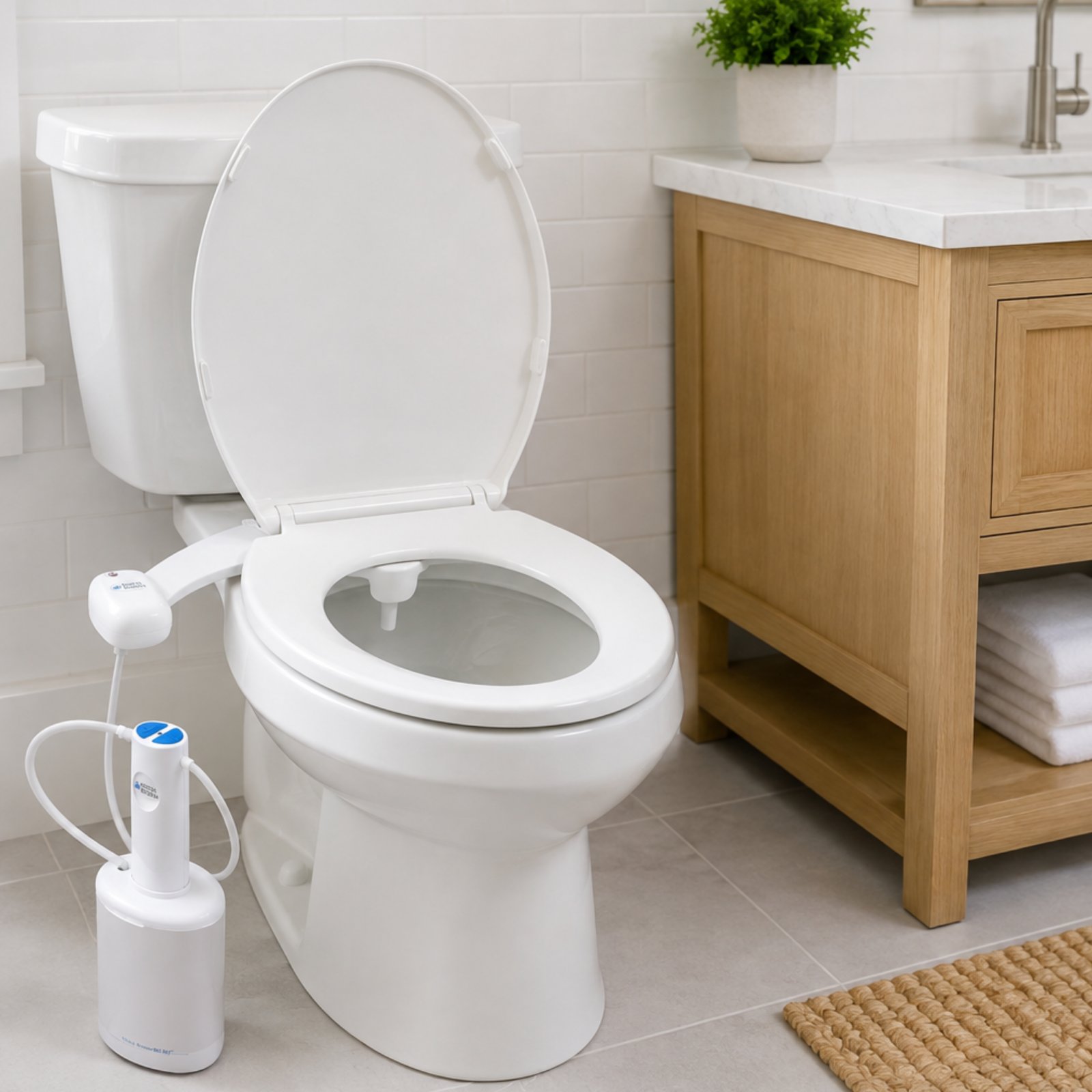
PortaBidets Home- No Plumbing Home Bidet
The Portabidet Home- No Plumbing Home Bidet mounts to underneath your toilet seat using the existing toilet seat screws. Water comes from the back like a typical bidet attachment. It has 4 pressure settings and its own water 1.4L water reservoir.
How to Read the Specs Before You Buy
Capacity, spray duration, and refill frequency are the three numbers that decide whether a portable bidet feels practical.
- Capacity - A 1.4L reservoir typically covers several short washes or two longer ones before a refill.
- Spray duration - At a low setting, a full 1.4L tank can run for several minutes of continuous spray.
- Refill frequency - One person using a portable unit two to three times a day will usually refill a 1.4L tank once daily.
- Pressure control - More modes give you finer adjustment, which matters most for sensitive users.
The Classification Competitors Skip
Most roundups blur two very different products together. A true no plumbing home bidet carries its own water and never touches your home's supply. A toilet-tank attachment looks similar in photos but connects to the fill valve with a T-adapter and flexible hose, which means shutting off the water and doing real plumbing work. If the box includes a T-adapter and a wrench, it belongs in the attachment category, not this one. Keeping that line clear is the fastest way to avoid buying the wrong product for a rental or an apartment.
How a Rechargeable Bidet Delivers Pressure Without a Water Line
Pressure comes from a pump, not from your home's water line. That's the whole trick.
A rechargeable bidet stores water in a reservoir, then a small electric pump pushes it through the nozzle at a steady rate. Because the pump runs on a battery, output stays consistent from the first spray to the last.
Gravity-fed and squeeze models start strong and fade as the water level drops. A pump doesn't. The pressure you feel on the first second is the pressure you feel on the last.
Battery Life, Refill Frequency, and Spray Duration
Three specs decide whether a portable bidet feels like a real bidet or a toy:
- Reservoir size - A 1.4L tank covers several uses before a refill.
- Pressure modes - Low, medium, high, and highest let you adjust per use. More modes mean finer control, which matters for sensitive users.
- Battery - Rechargeable packs typically handle multiple days of normal use per charge. A full charge usually lasts through a week of typical home use at low to medium settings.
Refill frequency depends on your pressure setting. Run it on high and you'll refill sooner. Run it on low and the same tank lasts longer. As a rough guide, one person using a 1.4L unit two to three times a day will refill about once daily.
Spray duration follows the same logic. A full 1.4L tank can run for several minutes of continuous spray at a low setting.
If you're elderly or have limited hand strength, this is the key difference. There's nothing to squeeze. You press a button and the pump does the work.
What the Pump Doesn't Do
A rechargeable pump gives you steady pressure, but it does not heat water, filter it, or connect to a supply line. You supply the water and the temperature. That's the trade-off for skipping plumbing entirely, and it's why refill habits matter more with a portable unit than with a tank attachment.
Step-by-Step Setup, Use, and Refill for a Portable Bidet for Home Use
Setup takes about two minutes, and none of it involves tools.
Total time: 2-3 minutes Difficulty: Beginner Tools needed: None
What you'll need:
- Your portable bidet and wand
- A sink or tub for filling
- A charged battery
Step 1: Charge the battery first. Plug in the pump and let it reach a full charge before first use. Most units arrive partly charged, so top it off.
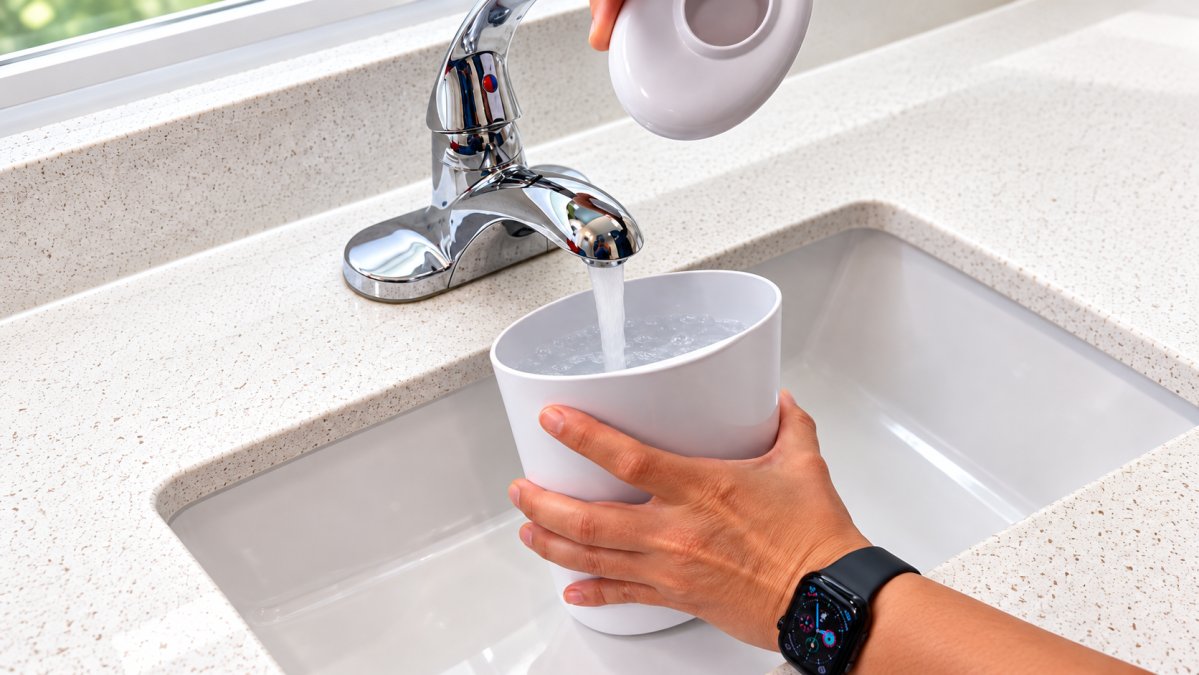
Step 2: Fill the reservoir. Hold the tank under a faucet and fill to the line. Lukewarm water works best.
PortaBidets Wand – Handheld Bidet, No Plumbing Needed →
Step 3: Attach the wand. Snap the tubing onto the pump. On the PortaBidets Wand, the 60-inch tube connects with a quick push. No tools.
Step 4: Mount or position. For a toilet-mounted model, set the bracket on the tank or bowl edge. For a handheld, just hold it.
Step 5: Test the spray. Point the nozzle into the bowl and press the button. Cycle through each pressure mode so you know what each one feels like.
Step 6: Use it. Sit normally, angle the wand, and spray. Work front to back.
Step 7: Refill when needed. Empty tank means a quick trip to the sink. A 1.4L reservoir usually covers several sessions.
Expected result: A steady, adjustable spray with no plumbing work and no marks on your toilet.
No-Plumbing Bidet for Renters: Installation-Free and Landlord-Safe
Renters are the biggest group buying these, and the reason is simple. A no-plumbing bidet for renters leaves nothing behind.
There's no T-adapter on the fill valve. No sealant. No drilled holes. When you move out, you pack it in a bag and take it with you. Your security deposit stays intact.
Compare that to a toilet-tank attachment, which requires shutting off the water, unscrewing the supply line, and adding an adapter. Some leases prohibit it outright. Others allow it but require you to reverse it at move-out.
The U.S. Department of Housing and Urban Development publishes guidance on tenant rights and lease terms, and modification clauses are common in standard leases. Check yours before buying anything that touches the plumbing.
A portable unit also sidesteps another renter problem: odd bathroom layouts. If your toilet sits tight against a wall, a tank attachment can be awkward to fit.
Hygiene, Cleaning, and Safe Storage Between Uses
Clean the nozzle after every use.
Bidet hygiene comes down to three habits:
- Rinse the nozzle after each use by running it briefly over the bowl
- Empty the reservoir if you won't use it for a few days
- Wipe the housing with a mild cleaner, never submerge the pump
Drying matters too. Shake off the wand and let it air dry before packing.
For storage, keep the wand and tubing separate from dirty laundry. The PortaBidets wand unsnaps into two pieces and fits inside the Traveler's reservoir.
Accessibility and Caregiver Use: What to Look For
Button-operated pumps are beneficial for anyone with limited grip strength.
Look for these when buying for an elderly parent or someone with limited mobility:
- Push-button operation - no squeezing, no pumping by hand
- Multiple pressure modes - start low, increase as comfort allows
- Long tubing - reach without twisting or leaning
- Lightweight reservoir - easy to carry and refill
- Simple controls - one button, clear modes
Caregivers get the same benefits. A handheld wand reaches where a fixed nozzle can't, which helps with bedbound or post-surgery care. The CDC's guidance on personal hygiene and infection control stresses thorough cleaning after toileting, and a bidet makes that easier to do consistently.
The Wand Add-On from PortaBidets costs $24.99 and connects to an existing Traveler or Home bidet, adding a 12.5-inch wand and 60 inches of tubing for extra reach. It packs inside the reservoir, so it adds no bulk.

Most bathrooms weren't built for a bidet. Renters can't modify them, older homes have awkward plumbing, and hotels never have one. That's the gap a no-plumbing home bidet fills, and it's the reason we started PortaBidets in the first place.
Our rechargeable pump system gives you real pressure without a water line. The Wand runs $99 and works at home, in a hotel, or at the office. The Traveler runs $149 with a 1.4L reservoir, four pressure modes, and three wash types. Both install in minutes and leave no trace when you pack up.
Get started with PortaBidets and take the comfort of your home bidet anywhere you go.
Frequently Asked Questions
Is there a bidet that doesn't require plumbing?
Yes. Handheld no plumbing bidet models use a refillable tank or reservoir instead of a water line. You fill the tank from any sink, mount or hold the unit, and spray. Nothing connects to your toilet's supply, so there is no shutoff valve to touch, no T-adapter, and no plumber needed. The trade-off is that you refill manually, typically every few uses depending on tank size.
Can renters use a bidet without modifying the toilet?
Renters can use a no-plumbing bidet for renters because the unit sits on or beside the toilet rather than connecting to its water supply. There is no drilling, no sealant, and no permanent change to the fixture. You mount it, use it, and remove it before move-out. Check your lease for any clause about bathroom fixtures.
Are portable bidets powerful enough for everyday home use?
A rechargeable bidet with a pump and reservoir produces a consistent stream closer to a plumbed unit. Models with multiple pressure modes let you pick a gentle setting for sensitive use and a stronger spray for thorough cleaning. Look for a stated pressure range and battery runtime rather than assuming all portables perform the same.
How long does a rechargeable bidet battery last on a charge?
Runtime varies by model, pressure setting, and how long each use lasts. Charge the unit fully before a trip, carry the charging cable, and top it up whenever you have an outlet. A 1.4L reservoir paired with a charged pump covers typical daily home use between refills.


