




Bidet Benefits for Skin Health: A 2026 Guide
Table of Contents
- How Bidet Benefits for Skin Health Actually Work
- Bidet vs Toilet Paper for Sensitive Skin
- Bidet Benefits for Hemorrhoids and Anal Fissures
- Portable Bidet for Travel Hygiene: Keeping Your Skin Healthy Away From Home
- Post-Bidet Drying Techniques Most People Skip
- Frequently Asked Questions
Last Updated: September 17, 2026
How Bidet Benefits for Skin Health Actually Work
Bidet benefits for skin health come down to one simple shift: replacing a dry, abrasive wipe with a gentle stream of water. Water lifts residue away instead of smearing it across delicate tissue. At PortaBidets, we hear the same thing from customers again and again: once people switch, they never go back. Below, we'll break down exactly why that happens, and how to get the results without irritating reactive skin.
The Problem With Dry Wiping
Dry toilet paper doesn't just clean poorly. It creates friction against the perianal skin, and that friction leaves behind micro-abrasions: tiny tears you can't see but can definitely feel. Those micro-abrasions are a doorway for irritation, inflammation, and in some cases infection. A common mistake is assuming that a "clean" feeling means clean skin. In practice, dry wiping tends to push residue into skin folds rather than remove it, which is why so many people with sensitive skin stay uncomfortable even after wiping until it hurts.
What Water Does Differently
Water cleans without the mechanical trauma that dry paper causes. A directed stream rinses the area, reducing the pathogen load left behind after a bowel movement while leaving the skin's natural barrier function intact. Warm water adds a second benefit: it soothes irritated tissue and supports blood circulation in the area, which matters for anyone dealing with ongoing discomfort. The difference isn't marketing language.
Bidet vs Toilet Paper for Sensitive Skin
For sensitive skin, a bidet almost always wins over toilet paper. The reason is contact: paper requires rubbing, and rubbing is what triggers most reactions. A bidet reduces that contact to near zero.
Why Sensitive Skin Reacts to Toilet Paper
Toilet paper can cause topical irritation in two ways. First, the physical abrasion of wiping strips away moisture and damages the skin barrier. Second, many papers contain fragrances, dyes, or bleach residues that trigger contact dermatitis in people who are already prone to reactions. Add frequent bowel movements from bowel distress, and the skin never gets a chance to recover between insults.
What to Look for in a Bidet If Your Skin Is Reactive
- Adjustable pressure. Start low and increase gradually. High pressure on reactive skin causes more harm than good.
- Warm water capability. Cold water is jarring and less soothing for inflamed tissue.
- No plumbing required. A mountable, rechargeable system means no installation damage and no landlord conversations.
- Portability. If you can't take it with you, you'll revert to paper the moment you travel.
Bidet Benefits for Hemorrhoids and Anal Fissures
Bidet benefits for hemorrhoids and anal fissures are some of the most well-documented reasons people make the switch, and also the most poorly explained. Both conditions involve damaged, inflamed tissue, and both get worse with friction. But "use warm water and low pressure" is where most guides stop, which leaves the reader without the specifics that actually determine whether a rinse soothes or aggravates.

How Water Reduces Mechanical Trauma
Every dry wipe drags across inflamed tissue and reopens what's trying to heal. Water removes residue without that drag, which lowers mechanical trauma and gives the area a chance to recover. Warm water also relaxes the sphincter muscle and supports blood circulation in the area, two effects that directly reduce pain and support healing. A common pattern among people managing these conditions is that a gentle rinse after each bowel movement becomes the single most effective habit change they make, more impactful than any topical product.
A Settings Guide by Skin Type and Condition
This is the part most guides skip, and it's the part that matters most. There is no single "correct" setting, the right one depends on what your skin is doing right now.
Active hemorrhoids (inflamed, tender):
- Temperature: warm, roughly body temperature. Hot water increases swelling and can worsen the flare.
- Pressure: the lowest setting that still rinses clean. If you can feel the stream hitting tissue, it's too strong.
- Duration: short. 10 to 20 seconds of gentle rinse, then dry. Longer exposure softens skin without added benefit.
Anal fissures (a tear, often with sharp pain and bleeding):
- Temperature: warm, never hot. Heat can increase bleeding risk in an active tear.
- Pressure: minimum. A fissure is an open wound; a direct high-pressure stream can reopen it.
- Angle: aim slightly away from the tear if you can tell where it is. A diffuse rinse beats a pinpoint jet.
Sensitive but not actively inflamed skin:
- Temperature: warm is comfortable, cool is acceptable if warm isn't available.
- Pressure: low to medium, adjusted by feel rather than by number.
- Duration: whatever it takes to feel clean, then stop.
Resilient skin (no active condition):
- Temperature: personal preference. Warm is more soothing; cool is fine.
- Pressure: medium is usually enough. Higher settings don't clean better, they just hit harder.
The "More Pressure Is Better" Mistake
A common mistake is treating more pressure as a better clean. In practice, gentle and consistent beats forceful every time. High pressure on inflamed tissue can aggravate a fissure, increase bleeding, and push residue into folds rather than out of them. The goal is to rinse, not to blast. If you find yourself increasing pressure because the area still feels unclean, the problem is usually angle or duration, not force.
Temperature: What Warm Water Actually Does
Warm water is not just more comfortable than cold. It relaxes the sphincter, which reduces the spasm that makes fissures so painful, and it supports local blood flow, which is part of how tissue heals. Cold water is jarring and less soothing for inflamed tissue, though it's not harmful. Hot water is the one to avoid, it can increase swelling and, in an active fissure, bleeding.
When to Talk to a Clinician
A bidet is a comfort and hygiene tool, not a treatment. If you have bleeding that isn't explained by a known fissure, pain that's worsening rather than improving, or symptoms that persist for more than a few weeks, that's a conversation for a clinician, not a settings adjustment. The bidet can make daily management more tolerable, but it doesn't replace diagnosis.
Portable Bidet for Travel Hygiene: Keeping Your Skin Healthy Away From Home
Portable bidet for travel hygiene solves a problem most people don't think about until they're in a hotel with nothing but rough paper. Skin doesn't get a vacation from its routine, and switching back to dry wiping for a week can undo weeks of progress.
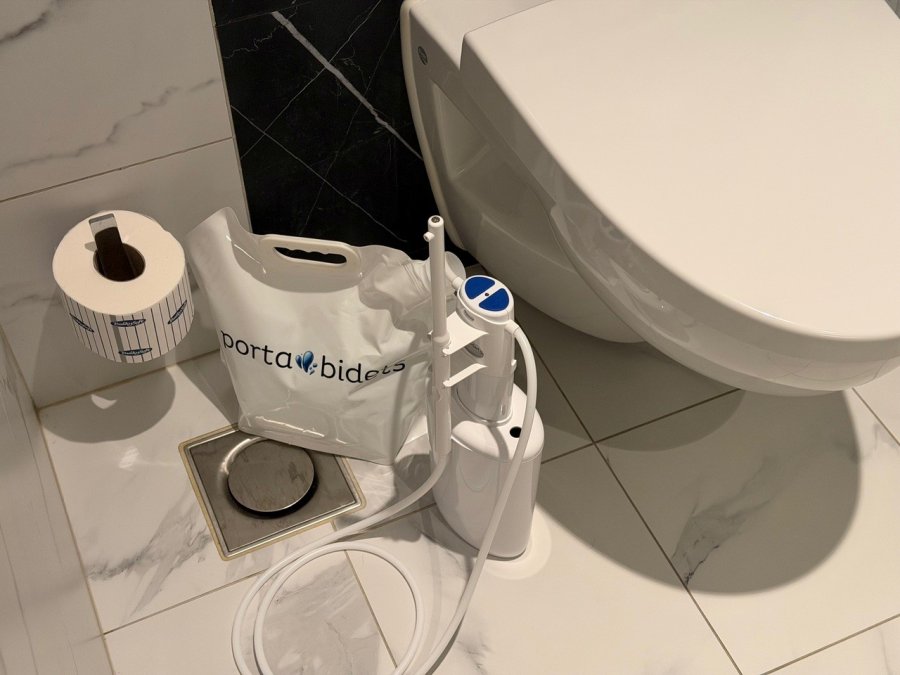
Traveler using a portable bidet in a cruisel bathroom to enjoy bidet benefits while maintaining hygiene on the go.
Post-Bidet Drying Techniques Most People Skip
Drying is the step that decides whether a bidet helps your skin or quietly works against it. Most articles stop at "pat dry." That leaves out the part that actually matters: what residual moisture does to perianal skin, and why the method you choose changes the outcome.
Why Residual Moisture Is a Skin Problem
The perianal area is a warm, occluded, high-friction environment. When water stays behind after a rinse, it softens the outer layer of skin, a process called maceration. Macerated skin is more permeable, more vulnerable to friction, and more hospitable to the bacteria and yeast that already live in the area. That's the mechanism behind the familiar cycle: rinse, stay damp, chafe, itch, wipe harder, irritate further.
Air-Drying vs. Pat-Drying: What Each One Does
Air-drying (a warm-air dryer or simply waiting) avoids all mechanical contact, which is the safest option for anyone with active fissures, hemorrhoids, or raw skin. The trade-off is time, most people won't wait the 30 to 60 seconds it takes to actually dry, so they end up pulling up clothing over damp skin. Partial air-drying followed by a brief pat is a realistic compromise.
Matching the Method to Your Skin
- Reactive or inflamed skin (fissures, active hemorrhoids, contact dermatitis): warm air first, then a light pat with a soft cloth. Skip paper entirely.
- Sensitive but not inflamed skin: pat-dry with a dedicated soft cloth. Keep it separate from bath towels.
- Resilient skin: pat-dry is fine; air-drying is optional.
- Travel: hotel toilet paper is often the roughest option available, so pack a small soft microfiber cloth rather than relying on what's in the room.
Frequently Asked Questions
Does using a bidet help with skin irritation?
Yes. Water cleansing reduces the friction and chemical exposure that cause most perianal irritation. Toilet paper creates micro-abrasions that let irritants penetrate the skin barrier. A bidet rinses without rubbing, which lowers the risk of contact dermatitis and chafing. For best results, use warm water at moderate pressure and pat dry gently afterward rather than rubbing.
Is a bidet better for sensitive skin than toilet paper?
For most people with sensitive skin, yes. Toilet paper, especially scented or recycled varieties, can leave fibers and chemical residue that trigger irritation. A bidet removes waste with water alone, so there is no mechanical trauma and no contact with dyes or fragrances. If your skin reacts easily, a portable bidet gives you control over water temperature and pressure, which further reduces the chance of a flare-up.
Can bidets help prevent hemorrhoids or anal fissures?
Bidets do not cure hemorrhoids, but they can reduce the irritation that makes symptoms worse. Dry wiping aggravates existing hemorrhoids and can tear fragile tissue, leading to fissures. Rinsing with warm water soothes inflammation and keeps the area clean without friction. Many people with hemorrhoids find that switching to a bidet lowers discomfort during bowel movements and supports better healing between episodes.
Are there any risks to using a bidet for skin health?
Risks are minimal when you use the bidet correctly. Water that is too hot can burn or dry out the skin, and excessive pressure can cause irritation. Always start with warm water and low pressure, then adjust. If you share a bidet, clean the nozzle regularly to prevent bacterial buildup. People with compromised immune systems or open wounds should check with a doctor before regular use.


